

How are Agricultural Implement Tires evolving to support precision farming technologies
2026-04-08
Precision farming demands accuracy, data integration, and reduced field variability. At the heart of this transformation lies an often-overlooked component: Agricultural Implement Tires. These tires are no longer simple rubber rings. They now serve as active data nodes and efficiency tools. JABIL engineers have observed a clear shift—from passive components to smart systems that communicate directly with farm management platforms.
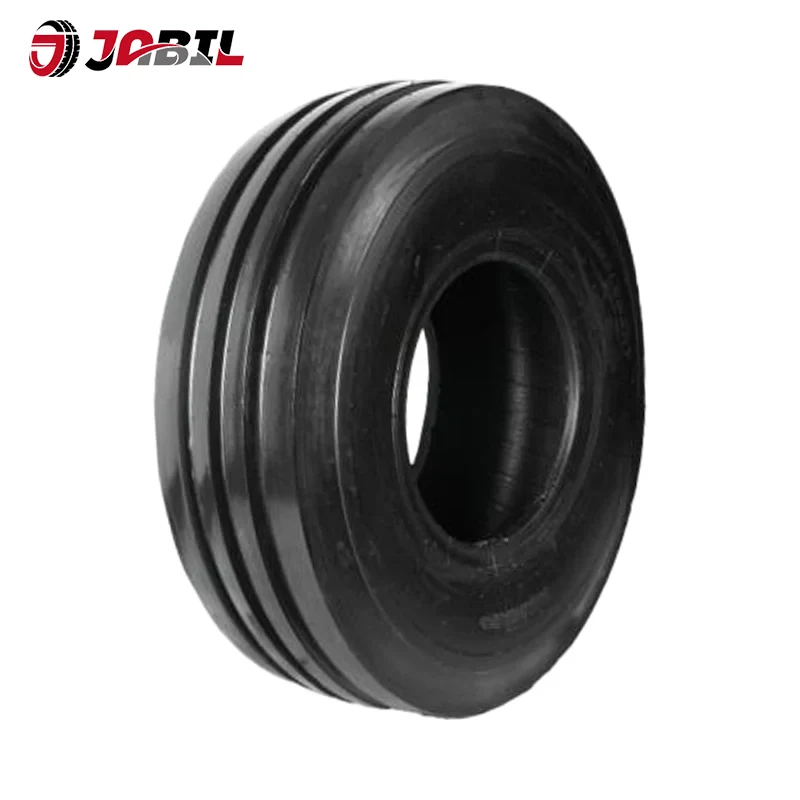
Modern Agricultural Implement Tires integrate sensors, variable inflation mechanisms, and advanced tread compounds. These innovations directly support GPS-guided implements, variable rate application, and real-time soil condition monitoring.
Key technological evolutions in Agricultural Implement Tires for precision farming
| Technology | Function | Benefit for Precision Farming |
|---|---|---|
| Embedded RFID sensors | Tire identification and pressure tracking | Automatic data logging per implement |
| Central Tire Inflation Systems (CTIS) | On-the-go pressure adjustment | Reduced soil compaction in headlands |
| High-deflection sidewalls | Larger footprint at lower pressure | Consistent depth control for seeding |
| Conductive tread compounds | Static electricity dissipation | Protects sensitive onboard electronics |
Three ways JABIL supports precision farming through tire innovation
-
Sensor-ready bead areas: Designed for clean mounting of wheel-end sensors without damaging tire structure.
-
Low-inflation stability: Maintains shape and load capacity at pressures as low as 6 psi, ensuring GPS accuracy remains within 2 cm.
-
Self-cleaning tread patterns: Prevents mud buildup that could unbalance implements and skew application maps.
Agricultural Implement Tires FAQ – Common questions from precision farmers
Q1: How do Agricultural Implement Tires affect the accuracy of GPS-guided implements
A1: Tire deflection and sidewall flex directly change implement height and tilt. When a tire runs at inconsistent pressure, the GPS receiver mounted on the implement shifts position by several centimeters. This creates "pass-to-pass" errors in seeding or spraying. JABIL designs Agricultural Implement Tires with reinforced bead packs and stabilized shoulder blocks. These features keep the tire’s rolling radius constant even under heavy draft loads. For precision farming, maintaining a consistent tire footprint means the difference between perfect overlap and costly crop damage.
Q2: Can Agricultural Implement Tires send real-time data to a tractor’s cab
A2: Yes, but only if the tire is built to accept external sensing modules. JABIL constructs sidewalls with a flat sensor-mounting zone that does not flex excessively. Farmers install bolt-on pressure and temperature sensors inside this zone. The sensors transmit data via ISOBUS or Bluetooth to the tractor display. The tire itself does not generate data, but its physical design enables reliable sensor contact. Without this design, sensor readings fluctuate due to sidewall bending. Therefore, Agricultural Implement Tires engineered for precision farming include designated sensor pockets and conductive rubber layers that reduce signal interference.
Q3: Do low-pressure Agricultural Implement Tires reduce soil compaction without losing stability for heavy implements
A3: Traditional low-pressure tires sway under heavy side loads, causing the implement to drift off the guidance line. JABIL solves this with Variable Flexion (VF) technology. A VF-rated Agricultural Implement Tire carries 40% more load at the same pressure as a standard radial tire. At 6 psi, the tire footprint spreads up to 30% wider, lowering ground pressure below 4 psi. The reinforced lower sidewall prevents lateral buckling. Precision farming trials show that JABIL VF tires reduce compaction layers by 22% while keeping implement drift under 1.5 cm per 100 meters. This allows farmers to run heavy fertilizer carts and planters on wetter soils without waiting extra days for drying.
Sustainability and data integration
JABIL currently tests Agricultural Implement Tires with built-in wear indicators. A colored compound layer becomes visible when tread depth reaches 80% of its useful life. Farmers log this visual cue into their fleet management software. Future versions will include passive UHF tags that store tire usage history, retread cycles, and recommended pressure for each field zone.
Contact us
Upgrade your precision farming setup with JABIL smart-ready Agricultural Implement Tires. Visit our technical team to request pressure-stability charts and sensor mounting guides.