

How Can Trailer Solid Tires Improve Heavy-Duty Trailer Performance?
2026-09-21
Trailer tires are critical to the safety, stability, and operating efficiency of industrial transportation. For trailers working in factories, warehouses, ports, airports, logistics centers, and other demanding environments, tire failure can interrupt material flow and increase maintenance costs. Trailer Solid Tires provide an airless solution designed for low-speed, heavy-load applications where puncture resistance, durability, and operational stability are essential. Unlike pneumatic tires, solid tires do not depend on air pressure, reducing the risk of flats and pressure-related downtime.
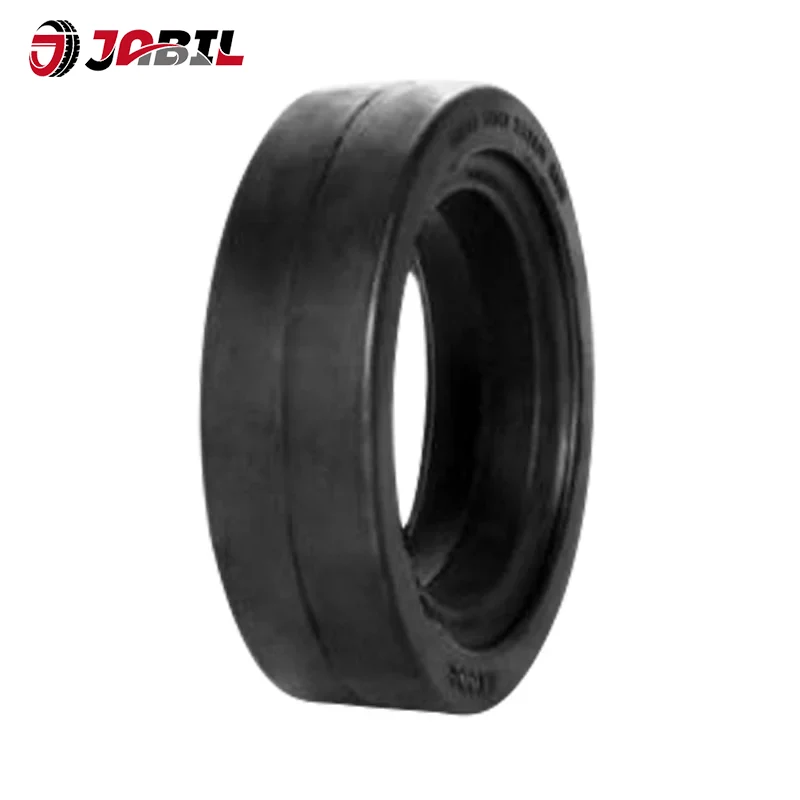
What Makes Trailer Solid Tires Different?
Trailer Solid Tires are manufactured from durable rubber compounds and reinforced structures rather than relying on an internal air chamber. This construction allows them to maintain their load-bearing function even when the operating surface contains sharp debris, metal fragments, or rough floor joints.
For industrial trailer applications, the major difference is not simply the absence of air. It is the ability to provide consistent support, high resistance to punctures, and reduced inflation maintenance during repetitive transportation cycles. This makes solid tires particularly suitable for low-speed trailers that frequently carry heavy materials.
Why Are Trailer Solid Tires Important for Industrial Operations?
Industrial trailers often follow repeated routes and may remain under load for extended periods. A pneumatic tire can be affected by punctures, air leakage, pressure changes, or blowouts, potentially stopping the trailer and disrupting production.
Trailer Solid Tires help address these problems through their airless construction.
| Performance Factor | Trailer Solid Tires | Pneumatic Tires |
|---|---|---|
| Puncture Resistance | Excellent | Vulnerable to punctures |
| Inflation Maintenance | Not required | Required |
| Load Stability | High | Depends on pressure |
| Downtime Risk | Low | Higher after tire damage |
| Shock Absorption | Moderate | Generally higher |
| Heavy-Duty Durability | Excellent for suitable applications | Depends on operating conditions |
For businesses managing multiple trailers, these differences can influence maintenance schedules, equipment availability, and long-term operating efficiency.
How Do Trailer Solid Tires Improve Operating Efficiency?
One of the most noticeable benefits is reduced maintenance. Since Trailer Solid Tires do not require regular inflation, operators do not need to repeatedly check and adjust tire pressure. Their puncture-resistant structure also reduces interruptions caused by sharp objects on industrial floors.
For example, trailers operating in ports may encounter metal debris and heavy loads, while factory trailers may repeatedly cross concrete floors and production areas. In these conditions, tire reliability becomes an important part of overall equipment productivity.
The benefits can include:
- Reduced risk of flat-tire interruptions
- Lower routine inflation requirements
- Stable load-bearing performance
- Improved operational continuity
- Longer service potential in appropriate applications
- Lower labor requirements for routine tire maintenance
However, solid tires should be selected according to operating speed, load, surface conditions, turning frequency, and working temperature rather than simply replacing every pneumatic tire with a solid tire.
Where Can Trailer Solid Tires Be Used?
Trailer Solid Tires are particularly suitable for low-speed transportation environments where durability is more important than high-speed ride comfort.
Typical applications include:
- Factory Trailers – Moving components, raw materials, and finished products between production areas.
- Warehouse Trailers – Supporting repetitive internal logistics operations.
- Port Trailers – Transporting heavy containers and materials across demanding surfaces.
- Airport Ground Equipment – Supporting transportation equipment used in airport environments.
- Industrial Tow Carts – Providing stable movement for repetitive material-handling operations.
- Heavy-Duty Platform Trailers – Handling substantial loads over predictable industrial routes.
Solid tires are generally more appropriate for low-speed industrial applications than high-speed road transportation.
Which Trailer Solid Tires Should Be Customized?
Not every trailer has the same wheel size, axle configuration, load requirement, or working environment. Therefore, customization can be important when standard tire specifications cannot provide the required performance.
JABIL Rubber Co., Ltd. supports OEM and ODM solutions for Trailer Solid Tires, allowing customers to develop tire specifications around their actual equipment and operating conditions. Customization can consider:
- Rim and wheel dimensions
- Load-bearing requirements
- Tread pattern
- Rubber compound
- Hardness
- Wear resistance
- Operating environment
- Turning frequency
- Indoor or outdoor application
This custom trailer tire capability is particularly valuable for manufacturers and distributors with specialized equipment. JABIL states that it can tailor solutions according to rim size and load requirements, with a range of molds available for special specifications.
How Does Boat-Type Customization Add Value?
For specialized transportation equipment, boat-type customization can be an important advantage when the trailer or transport platform has a unique structural configuration. Instead of limiting customers to standard tire dimensions, JABIL Rubber Co., Ltd. can support customized solutions according to equipment structure, wheel configuration, load requirements, and application conditions.
This flexibility allows the tire solution to be developed around the customer's actual trailer design rather than forcing the equipment to adapt to a standard product. For manufacturers working with different trailer structures, customized tread designs, dimensions, rubber compounds, and load specifications can help create a more application-specific solution.
The ability to support boat-type customization also strengthens JABIL's OEM/ODM positioning for customers looking for specialized Trailer Solid Tires rather than generic replacement products.
What Should Buyers Consider Before Choosing Trailer Solid Tires?
A suitable tire should match the actual operating environment. Buyers should evaluate several technical factors before placing an order:
- Maximum load: Calculate the expected load per wheel rather than considering only the total trailer capacity.
- Operating speed: Solid tires are generally better suited to low-speed industrial applications.
- Surface conditions: Concrete, asphalt, gravel, metal debris, and uneven surfaces can create different demands.
- Turning conditions: Frequent sharp turns can increase lateral stress and tread wear.
- Working hours: Continuous operation requires appropriate heat and wear resistance.
- Tire dimensions: Confirm rim size, outer diameter, width, and mounting requirements.
- Customization requirements: Special equipment may require customized molds, compounds, or tread patterns.
Selecting according to these factors can help balance durability, stability, operating efficiency, and total lifecycle cost.
How Can JABIL Rubber Co., Ltd. Support Your Trailer Tire Needs?
JABIL Rubber Co., Ltd. focuses on solid tire manufacturing and provides solutions for demanding industrial applications. Its Trailer Solid Tires are designed around requirements such as puncture resistance, load capacity, wear resistance, and long-term operational reliability.
For B2B buyers, the value goes beyond purchasing a standard tire. A professional supplier can help match the tire structure and compound to the trailer's actual operating conditions. JABIL also supports customized Trailer Solid Tires, OEM/ODM requirements, and specialized specifications for industrial transportation applications.
Conclusion
Trailer Solid Tires are an important solution for industrial trailers that require reliable low-speed transportation, strong load support, and resistance to puncture-related downtime. Their airless construction reduces inflation maintenance and provides dependable performance in factories, warehouses, ports, airports, and other demanding environments.
More importantly, customization can make a significant difference. With support for specialized dimensions, compounds, tread patterns, load requirements, and boat-type customization, JABIL Rubber Co., Ltd. can provide Trailer Solid Tires that are developed around specific equipment rather than a one-size-fits-all approach.
If you are looking for durable, customized, and application-oriented Trailer Solid Tires for your trailer equipment, contact us at JABIL Rubber Co., Ltd. to discuss your tire dimensions, load requirements, operating environment, and OEM/ODM customization needs.