
How Do Braked Torsion Axles Transform Trailer Safety, Stability, and Long-Term Performance?
2025-12-02
Braked torsion axles for trailers play a central role in modern towing systems, providing a smoother, safer, and more controlled experience across various road conditions.
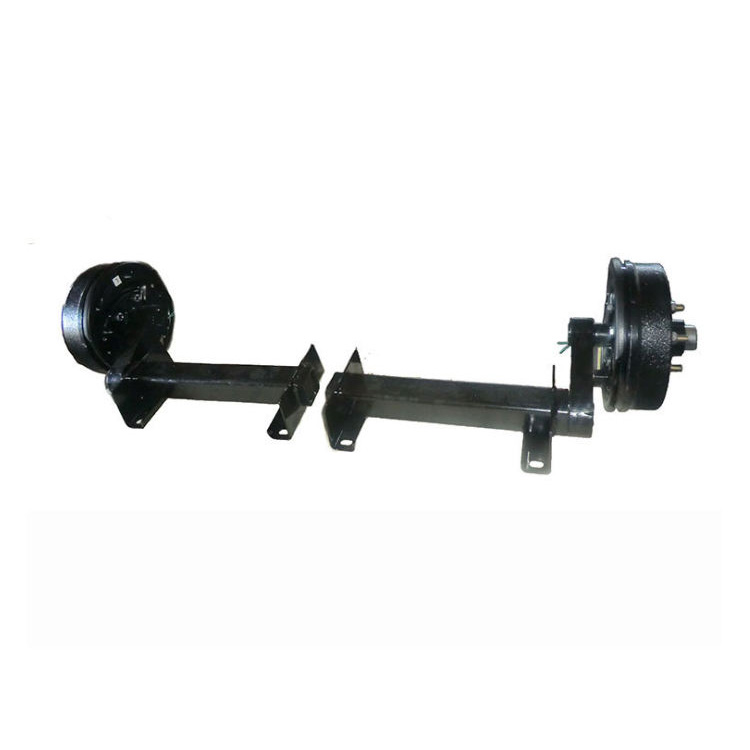
Braked torsion axles use an independent suspension system based on rubber cords inside a steel tube. When the trailer encounters road impacts, the rubber compresses, absorbing shock and maintaining stability. When paired with integrated braking systems, these axles significantly enhance stopping power and reduce trailer sway.
To understand how these axles improve performance, it is crucial to evaluate the core mechanisms:
-
Independent wheel suspension reduces vibration transfer.
-
Rubber torsion arms provide progressive resistance.
-
Braked configuration improves stopping efficiency and safety.
-
Low-maintenance structure eliminates the need for leaf-spring upkeep.
Key Product Parameters
| Parameter Category | Specification Details |
|---|---|
| Load Capacities | 750 kg, 1500 kg, 1800 kg, 2000 kg, 2500 kg options |
| Axle Tube Material | High-tensile steel with anti-corrosion coating |
| Suspension Type | Rubber torsion arm suspension (independent) |
| Braking System | Mechanical or hydraulic drum brakes; electric brakes optional |
| Hub/Stud Pattern | 4-stud / 5-stud / 6-stud configurations |
| Ride Height | Customizable dropped or straight spindle |
| Mounting Brackets | Weld-on or bolt-on options |
| Certification | Compatible with DOT, CE, and ISO standards based on region |
These specifications allow manufacturers and trailer builders to match axle configurations with load requirements, trailer size, and intended use.
How the Structure and Function of Braked Torsion Axles Enhance Safety and Daily Operation
Braked torsion axles are engineered to address key challenges in towing—stability, braking responsiveness, and road shock absorption. Their structure directly influences towing safety in several ways.
Shock Absorption and Noise Reduction
Rubber cords inside the axle tube deform under load, absorbing vertical forces and reducing noise during operation. This design ensures smoother rides on gravel, highways, and uneven terrains.
Improved Trailer Control
Because each wheel operates independently, the trailer maintains superior stability during turning, braking, and lane changes. This is critical for:
-
Utility trailers
-
Boat trailers
-
Livestock trailers
-
RV and caravan applications
Braking Efficiency
Integrated brakes shorten stopping distance and distribute braking force across the trailer, preventing:
-
Excessive load transfer
-
Jackknifing
-
Tire skidding
Maintenance Advantages
Braked torsion axles require minimal maintenance because the sealed tube prevents dust, water, and corrosion from affecting internal components. There are no springs to lubricate or service.
How Market Demand and Technological Trends Are Shaping the Future of Braked Torsion Axles
The trailer component industry continues to evolve as users seek better reliability, longer lifespan, and enhanced towing comfort. Several trends are influencing the development of braked torsion axles:
Technological Innovation
-
Enhanced rubber formulations: Improved durability and temperature resistance.
-
Lightweight steel and composite materials: Higher strength-to-weight ratios.
-
Integrated electric braking systems: Better compatibility with modern towing vehicles.
Growing Demand for Customizable Axles
Trailer manufacturers now seek axles with configurable ride heights, hub patterns, and braking systems. This customization increases compatibility with regional markets and trailer types.
Safety Regulations Driving Upgrades
Government standards for towing safety continue to tighten. Braked torsion axles align with these trends due to their inherent stability and braking performance.
Rise of Multi-Terrain Trailers
As outdoor recreation, marine transport, and small commercial transport grow globally, the demand for torsion axles with higher load ratings and corrosion-resistant materials is accelerating.
How to Choose High-Quality Braked Torsion Axles and Why Fumin Stands Out as a Reliable Manufacturer
Choosing the right braked torsion axle involves careful evaluation of load capacity, braking type, hub compatibility, and durability. The following considerations help ensure long-term performance:
-
Match axle rating to trailer weight (include cargo weight).
-
Ensure brake type compatibility with the towing vehicle.
-
Check corrosion protection especially for marine trailers.
-
Evaluate suspension stiffness based on road conditions.
-
Confirm compliance with local standards and certifications.
A high-quality axle enhances safety, extends trailer lifespan, and reduces maintenance cost. This is where Fumin, an experienced trailer parts manufacturer, brings significant value through consistent quality, reliable materials, and customizable solutions. The company provides a wide range of braked torsion axles designed for diverse applications, offering strong technical support and flexible configurations for global customers. For detailed specifications, customization assistance, or OEM/ODM services, contact us to explore the most suitable axle solution for your trailers.
Frequently Asked Questions (FAQ)
Q1: How often should a braked torsion axle be maintained?
A: Torsion axles require far less maintenance than spring axles because their internal components are sealed inside the tube. The main routine checks involve brake inspection, hub lubrication intervals, and visual examination of mounting brackets. In most cases, annual servicing or every 10,000–12,000 km is sufficient, depending on terrain and usage intensity.
Q2: How do braked torsion axles improve towing stability on highways?
A: Independent suspension allows each wheel to react to road surface changes separately. This reduces sway, improves tire contact with the road, and enhances braking distribution, all of which contribute to smoother high-speed towing. The integrated braking system further ensures that the trailer decelerates evenly without placing excessive force on the towing vehicle.
If you require high-performance braked torsion axles engineered for safety, durability, and efficiency, Fumin offers dependable solutions backed by advanced manufacturing and strict quality control. To receive professional guidance or request a product quote, contact us today.