

How Do Camshaft and Crankshaft Work Together?
2026-01-12
Abstract
Camshaft and Crankshaft are two of the most critical mechanical components inside an internal combustion engine. Their precise coordination determines engine timing, combustion efficiency, power delivery, and long-term reliability. Many equipment buyers, maintenance engineers, and automotive professionals face recurring challenges such as abnormal engine noise, timing failure, power loss, or premature wear—often rooted in improper camshaft and crankshaft interaction. This article provides a structured and practical explanation of how these components function together, common failure points, selection considerations, and maintenance strategies, helping decision-makers reduce risk and improve engine performance.
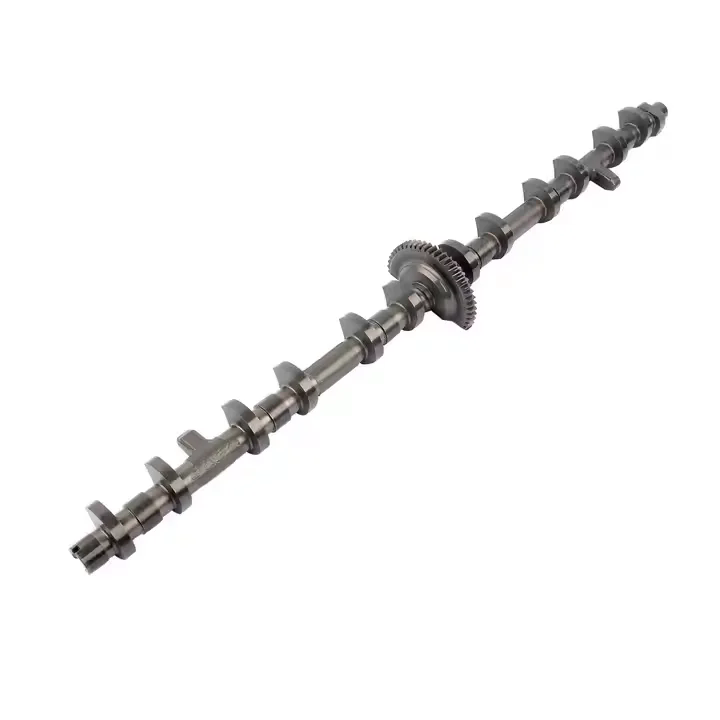
Table of Contents
- Article Outline
- Understanding Camshaft and Crankshaft Basics
- How Camshaft and Crankshaft Coordinate Engine Timing
- Common Problems and Customer Pain Points
- Functional Comparison and Key Differences
- Selection and Quality Considerations
- Maintenance and Service Best Practices
- Frequently Asked Questions
Article Outline
- Core roles of camshaft and crankshaft in engine systems
- Mechanical synchronization and timing principles
- Typical operational failures and root causes
- Material, machining, and design considerations
- Maintenance strategies to extend service life
Understanding Camshaft and Crankshaft Basics
The crankshaft converts linear piston motion into rotational energy, forming the mechanical foundation of engine output. Each downward piston stroke transfers force to the crankshaft, enabling torque generation and continuous rotation.
The camshaft, by contrast, controls valve operation. Through precisely shaped lobes, it regulates the opening and closing of intake and exhaust valves, allowing air-fuel mixture intake and exhaust gas discharge at exact moments.
Although distinct in function, camshaft and crankshaft are mechanically inseparable. Their interaction governs combustion timing, engine balance, and overall efficiency.
How Camshaft and Crankshaft Coordinate Engine Timing
The relationship between camshaft and crankshaft is defined by timing synchronization. In a four-stroke engine, the crankshaft rotates twice for every single rotation of the camshaft. This ratio ensures valves open and close in perfect alignment with piston movement.
- Crankshaft rotation controls piston position
- Camshaft rotation controls valve actuation
- Timing belts, chains, or gears maintain synchronization
Even minimal deviation in timing can cause misfires, reduced power, increased fuel consumption, or catastrophic engine damage. This is why precision manufacturing and correct installation are essential.
Common Problems and Customer Pain Points
Many operational issues encountered by fleet operators, repair centers, and equipment manufacturers can be traced back to camshaft and crankshaft interaction problems.
| Problem | Likely Cause | Impact |
|---|---|---|
| Abnormal engine noise | Worn cam lobes or crank journals | Reduced engine lifespan |
| Loss of power | Incorrect valve timing | Lower efficiency and output |
| Hard starting | Timing misalignment | Operational instability |
| Engine seizure | Lubrication failure or poor materials | High repair or replacement cost |
Understanding these pain points allows buyers to focus on component quality rather than short-term cost savings.
Functional Comparison and Key Differences
| Aspect | Camshaft | Crankshaft |
|---|---|---|
| Main function | Valve timing control | Power transmission |
| Rotational speed | Half of crankshaft speed | Full engine speed |
| Load type | Intermittent contact stress | Continuous torsional load |
| Failure sensitivity | Timing accuracy | Structural strength |
Selection and Quality Considerations
Choosing the right camshaft and crankshaft involves more than dimensional compatibility. Buyers should evaluate:
- Material composition and heat treatment consistency
- Surface finish and wear resistance
- Precision of machining and balance control
- Compatibility with intended engine load and duty cycle
Manufacturers such as Ningbo YC focus on controlled production processes and strict inspection standards to ensure stable timing performance and long service life across automotive and industrial applications.
Maintenance and Service Best Practices
Preventive maintenance significantly reduces camshaft and crankshaft failure risk. Key practices include:
- Regular oil quality and pressure monitoring
- Timely replacement of timing belts or chains
- Inspection for abnormal vibration or noise
- Using compatible lubrication grades
Early detection of timing irregularities helps avoid secondary damage to valves, pistons, and bearings.
Frequently Asked Questions
What happens if camshaft and crankshaft timing is incorrect?
Incorrect timing can lead to misfires, reduced efficiency, increased emissions, or severe mechanical damage such as valve-piston collision.
Can camshaft or crankshaft wear be repaired?
Minor wear may be addressed through polishing or regrinding, but excessive wear typically requires replacement to maintain reliable engine operation.
How often should timing components be inspected?
Inspection intervals depend on engine design and operating conditions, but regular checks during scheduled maintenance are recommended.
Conclusion
Camshaft and Crankshaft form the mechanical heartbeat of an engine. Their synchronized operation directly influences performance, reliability, and operating cost. By understanding how these components work together, identifying early warning signs, and selecting high-quality parts, businesses can significantly reduce downtime and extend equipment lifespan.
For engineered camshaft and crankshaft solutions backed by manufacturing expertise and consistent quality control, Ningbo YC provides dependable options tailored to demanding applications. To explore specifications or discuss your project requirements, contact us today and take the next step toward stable and efficient engine performance.