Abstract
Sand Balloon Wheels are specialized low-pressure flotation wheels designed to dramatically improve mobility on soft terrain such as beaches, dunes, snow, and marshland. Unlike conventional rigid tires that sink under load, these wheels distribute weight across a larger surface area, reducing ground pressure and preventing entrapment in loose surfaces. This article explores how Sand Balloon Wheels work, the engineering principles behind them, their real-world applications, and how they solve common off-road mobility challenges faced by both recreational users and commercial operators.
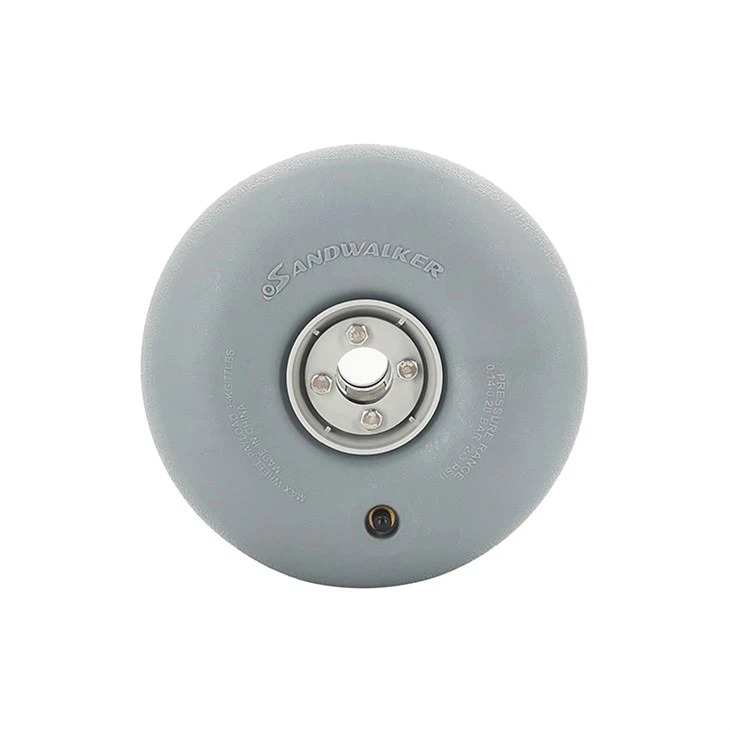
What Are Sand Balloon Wheels?
Sand Balloon Wheels are oversized, flexible, and low-pressure wheel systems engineered specifically for unstable surfaces. They are typically constructed using reinforced rubber or PVC materials with high tensile strength fabric layers inside. The defining feature is their ability to “float” over sand instead of cutting into it.
Unlike traditional pneumatic tires, which rely on higher inflation pressure for road efficiency, Sand Balloon Wheels operate at significantly lower pressure levels. This allows them to deform under load and spread weight more evenly, reducing sinkage and improving traction on soft terrain.
Key Mobility Challenges on Soft Terrain
Operating vehicles or equipment on sand or similarly loose ground presents several technical and practical challenges:
-
High sinkage risk: Narrow tires concentrate weight, causing vehicles to become stuck.
-
Low traction: Loose grains reduce friction and wheel grip.
-
Energy inefficiency: Engines must work harder to overcome rolling resistance.
-
Vehicle instability: Uneven surfaces cause tipping and steering difficulties.
-
Frequent recovery needs: Conventional wheels often require external assistance to escape soft traps.
These issues create operational delays, increased maintenance costs, and reduced usability of equipment in beach, desert, and snow environments.
How Sand Balloon Wheels Work
The working principle of Sand Balloon Wheels is based on ground pressure distribution and flotation mechanics. Instead of concentrating load onto a small contact patch, these wheels expand the contact area significantly.
When pressure is applied, the wheel deforms elastically, increasing its footprint. This reduces the pressure per square inch exerted on the sand surface, preventing penetration.
-
Low internal pressure: Enhances flexibility and surface adaptation.
-
Wide contact patch: Spreads load over a larger area.
-
Self-adjusting shape: Conforms to uneven terrain contours.
-
Enhanced flotation: Keeps equipment “on top” of loose surfaces rather than sinking.
This combination of mechanical design and material engineering allows Sand Balloon Wheels to function effectively where conventional wheels fail.
Core Advantages
Sand Balloon Wheels provide multiple operational benefits that directly address user pain points:
-
Improved mobility: Enables smooth movement across sand, mud, and snow.
-
Reduced vehicle strain: Lower resistance decreases fuel or energy consumption.
-
Enhanced safety: Better stability reduces risk of tipping or immobilization.
-
All-terrain adaptability: Suitable for multiple soft-ground environments.
-
Lower recovery costs: Reduces dependency on towing or external assistance.
These advantages make them especially valuable for beach logistics, outdoor tourism equipment, rescue operations, and marine transport systems.
Common Applications
Sand Balloon Wheels are widely used across various industries due to their versatility:
-
Beach utility carts and transport trolleys
-
Marine equipment handling systems
-
Rescue and emergency response vehicles
-
Recreational beach trailers
-
Outdoor camping and expedition gear carriers
-
Light industrial transport in sandy construction zones
Their adaptability makes them a preferred solution for both commercial operators and recreational users working in coastal or desert environments.
Performance Comparison Table
|
Feature
|
Traditional Wheels
|
Sand Balloon Wheels
|
|
Surface Compatibility
|
Hard surfaces only
|
Soft & unstable terrain
|
|
Ground Pressure
|
High
|
Low
|
|
Risk of Sinkage
|
High
|
Very low
|
|
Traction on Sand
|
Poor
|
Strong
|
|
Maintenance Needs
|
Moderate
|
Low
|
Buying Considerations
When selecting Sand Balloon Wheels, several technical parameters should be evaluated:
-
Load capacity: Ensure compatibility with intended equipment weight.
-
Material durability: High-strength rubber or reinforced PVC is recommended.
-
Inflation system: Adjustable pressure systems provide better adaptability.
-
Terrain type: Beach sand, snow, or mixed terrain may require different profiles.
-
Axle compatibility: Verify mechanical fitment with existing structures.
Maintenance Guidelines
Proper maintenance ensures long-term durability and consistent performance:
-
Regularly check air pressure levels to maintain flotation efficiency.
-
Inspect for punctures or surface wear after heavy use.
-
Clean sand and debris to prevent material degradation.
-
Avoid overloading beyond rated capacity.
-
Store in a cool, dry environment when not in use.
Product Overview & Manufacturer
High-quality Sand Balloon Wheels are engineered and supplied by Ningbo Marine Outdoor Products Co., Ltd., a manufacturer specializing in marine and outdoor mobility solutions. The company focuses on durable, terrain-adaptive products designed for harsh environmental conditions such as coastal zones and sandy landscapes.
More technical specifications and product configurations can be reviewed here: Sand Balloon Wheels Product Page
Their product line emphasizes durability, flotation efficiency, and compatibility with a wide range of marine and outdoor transport equipment.
Frequently Asked Questions
1. Are Sand Balloon Wheels suitable for paved roads?
They are primarily designed for soft terrain. Short-distance movement on hard surfaces is possible but not optimal for long-term use.
2. How much weight can they support?
Load capacity varies depending on size and construction, typically ranging from light utility loads to heavy-duty transport applications.
3. Do they require special maintenance?
Maintenance is minimal, mainly involving pressure checks and surface cleaning.
4. Can they be used in water environments?
Yes, they are often used in coastal and marine environments due to their corrosion-resistant materials.
5. Are they difficult to install?
Most models are designed for straightforward axle compatibility and easy installation.
Conclusion
Sand Balloon Wheels represent a practical engineering solution for mobility challenges on unstable terrain. By reducing ground pressure and improving flotation, they allow vehicles and equipment to operate efficiently in environments where traditional wheels fail. Their applications span recreational, industrial, and emergency sectors, making them a versatile and valuable technology for modern outdoor operations.
For reliable supply, technical support, and customized solutions, Ningbo Marine Outdoor Products Co., Ltd. provides professionally engineered Sand Balloon Wheels designed for demanding environments.
If you are looking to upgrade your off-road mobility systems or explore tailored wheel solutions for your business, contact us today to discuss your requirements and receive expert assistance.