

How Does a Car DSP Amplifier Transform In-Car Audio Performance?
2025-12-09
A Car DSP Amplifier is an integrated audio processing and power-amplification system designed to upgrade a vehicle’s factory or aftermarket sound setup. It combines digital signal processing (DSP) with high-efficiency amplification to optimize frequency response, correct acoustic imperfections, enhance staging, and deliver cleaner, more powerful sound.
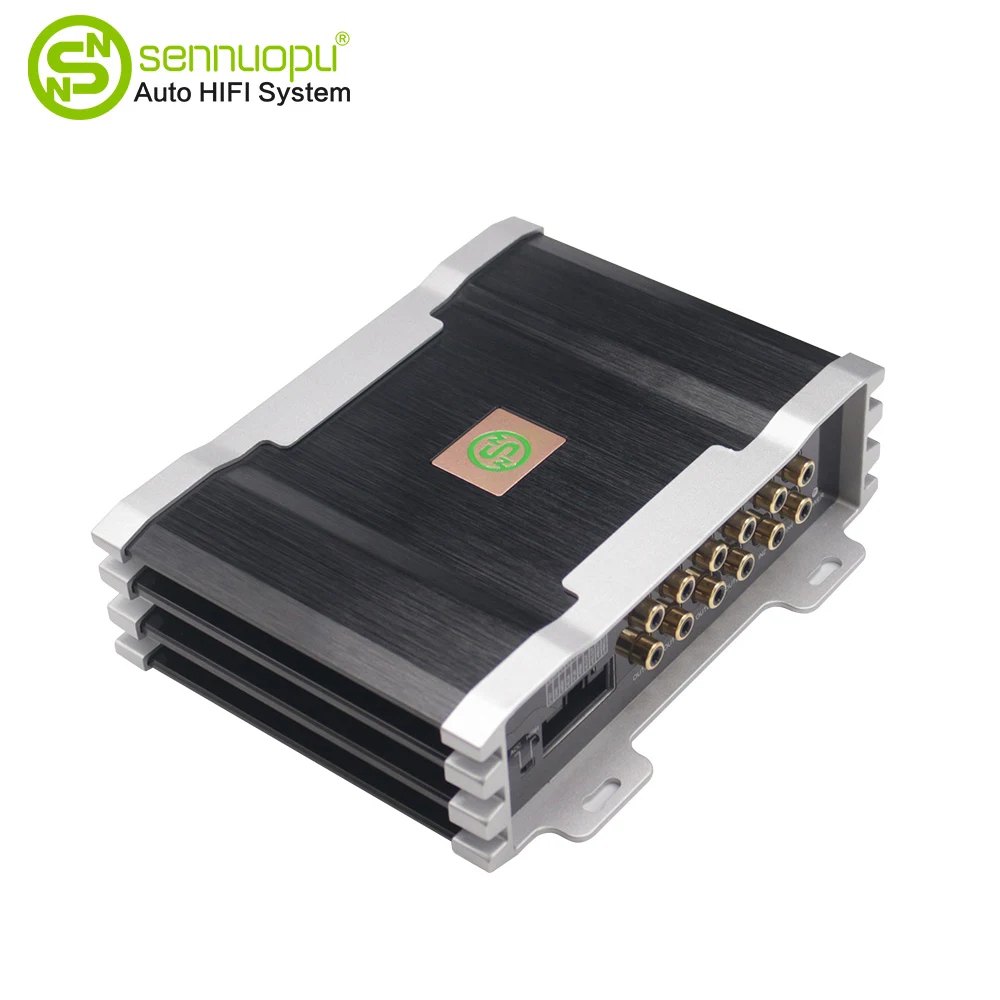
Below is a professional-grade specification reference list to demonstrate the functional depth commonly expected in premium Car DSP Amplifiers:
Key Technical Specifications of High-Performance Car DSP Amplifiers
| Category | Typical Specification Range | Functional Description |
|---|---|---|
| DSP Processor | 24–32-bit, 192 kHz sampling | Enables high-resolution signal tuning and real-time acoustic correction |
| Channels | 4 / 6 / 8 / 10 / 12 channels | Supports multi-speaker setups and complex system architecture |
| Amplifier Power | 50W–150W RMS per channel | Delivers strong, distortion-free audio output |
| SNR (Signal-to-Noise Ratio) | ≥95 dB | Ensures clean audio with minimal background noise |
| THD+N | ≤0.01% | Reflects distortion-free signal amplification |
| Crossover Options | HPF / LPF / BPF | Allows precise frequency allocation for each speaker |
| Equalization | 15–31-band parametric EQ | Enables fine tuning for acoustics and preferences |
| Time Alignment | 0–20 ms adjustable | Balances speaker delay to create a centered soundstage |
| Connectivity | RCA, Optical, Coaxial, Bluetooth | Supports varied input sources and wireless streaming |
| Control Software | PC / App tuning interface | Allows users to configure audio profiles with precision |
This article is organized into four sections, covering the operational principles, performance advantages, product features, future trends, and professional purchasing considerations for Car DSP Amplifiers.
How Does a Car DSP Amplifier Improve Sound Quality Inside a Vehicle?
A Car DSP Amplifier modifies and enhances audio signals before sending them to speakers, optimizing the system far beyond the capabilities of standard head units or basic amplifiers. The following breakdown illustrates how this transformation happens.
Frequency Optimization Through Multi-Band EQ
The DSP system analyzes incoming audio signals and divides them across multiple frequency bands. Equalization curves can be adjusted to:
-
Strengthen bass response without distortion
-
Enhance midrange clarity for vocals
-
Improve treble definition
-
Reduce harshness or resonance produced by the vehicle’s interior
High-resolution EQ ensures every speaker receives only the frequencies it is designed to reproduce.
Time Alignment for Perfect Staging
In a car cabin, speakers are at different distances from the listener. A DSP compensates for this by delaying channels so the sound from all speakers reaches the ears simultaneously. The results include:
-
A centered stereo image
-
A wider sound field
-
More accurate placement of instruments and vocals
This correction is essential for premium sound staging.
Dynamic Range Control and Clarity Enhancement
DSP modules apply dynamic compression and expansion to maintain balanced audio across all volume levels. This prevents:
-
Distortion during peaks
-
Loss of detail during quiet passages
-
Signal clipping
The output remains smooth, powerful, and stable even at high volumes.
Intelligent Crossover Management
A Car DSP Amplifier includes advanced crossover controls such as:
-
High-Pass Filters to protect tweeters
-
Low-Pass Filters for subwoofers
-
Band-Pass Filters for midrange drivers
These ensure that every speaker operates within its optimal frequency zone, extending speaker lifespan and improving overall harmony.
How to Choose the Right Car DSP Amplifier Based on Features and Performance?
Selecting a DSP amplifier requires understanding several technical and functional elements that affect sound quality and installation flexibility.
Power Output and Channel Count
More channels offer broader system customization, supporting setups such as:
-
Front + rear speakers
-
Active 3-way systems
-
Subwoofer integration
-
Multi-zone configuration
Higher power output results in louder, cleaner sound without strain.
Noise Control and Distortion Handling
High SNR and low THD+N numbers are essential. A model with:
-
SNR ≥ 100 dB
-
THD+N ≤ 0.01%
will provide clean, accurate reproduction even at high volumes.
Software Tuning Interface
A professional DSP amplifier should include:
-
Real-time waveform monitoring
-
Easy-to-navigate GUI
-
Adjustable EQ, crossover, phase, and delay settings
-
Multiple preset storage
User-friendly tuning software determines how well the amplifier can adapt to different vehicles and listening preferences.
Connectivity and Input Flexibility
Modern DSP amplifiers support:
-
High-level OEM speaker input
-
RCA pre-outs
-
Optical/coaxial digital input
-
Bluetooth streaming and tuning control
This ensures compatibility with both stock and aftermarket systems.
Heat Management and Circuit Protection
Premium models employ:
-
Efficient heat sinks
-
Overload protection
-
Thermal shutdown mechanisms
-
Short-circuit safeguards
These features ensure long-term stability and safety.
What Are the Future Trends of Car DSP Amplifiers in the Automotive Audio Market?
The Car DSP Amplifier industry is evolving rapidly, integrating new technologies and responding to shifts in consumer expectations.
AI-Enhanced Audio Calibration
Upcoming DSP systems incorporate automated sound tuning through real-time cabin sensing. Microphones and algorithms adjust EQ, delay, and gain for optimal results without manual intervention.
Advanced Wireless Control and Cloud Profiles
Future DSP models will support:
-
Cloud storage for sound profiles
-
Remote tuning via mobile apps
-
OTA software updates
-
Enhanced Bluetooth low-latency audio
This enhances user convenience and system adaptability.
Integration with Vehicle Electronics and Smart Systems
DSP amplifiers are expected to interface more intelligently with:
-
Vehicle CANBUS systems
-
OEM head unit data streams
-
Built-in noise cancellation systems
-
Electric vehicle power management
This ensures seamless operation while preserving factory functionality.
Miniaturization and Higher Efficiency
Next-generation components will:
-
Reduce physical size
-
Increase power-to-size ratios
-
Lower heat output
-
Improve energy efficiency for hybrid and EV use
These trends make installation easier and performance stronger than ever.
Common Questions About Car DSP Amplifiers
Q1: How difficult is it to install a Car DSP Amplifier in a factory audio system?
A1: Installation complexity depends on the vehicle and amplifier type. Models with high-level input and auto-sensing can integrate directly with factory wiring without modifying the OEM head unit. Professional installers typically calibrate the DSP using specialized software to match the acoustics of each vehicle. With correct installation, the OEM system can retain all original functions while achieving significantly improved sound quality.
Q2: Will a Car DSP Amplifier work with stock speakers, or is an upgrade required?
A2: A DSP amplifier can enhance factory speakers by providing cleaner, better-controlled audio signals. Features like time alignment and multi-band EQ help compensate for speaker limitations and cabin acoustics. While upgrading speakers can further improve fidelity and bass response, a DSP amplifier alone already brings noticeable improvement and is often considered the most cost-effective upgrade.
Why a Professional Car DSP Amplifier Matters and How Sennuopu Supports High-Quality Audio Upgrades
A Car DSP Amplifier plays a crucial role in transforming vehicle audio by combining precise digital processing with powerful amplification. Its ability to correct acoustic flaws, optimize signal flow, and enhance speaker performance makes it one of the most impactful upgrades for any in-car sound system. As technology evolves, DSP amplifiers will continue to integrate advanced tuning automation, intelligent connectivity, and high-efficiency designs.
For consumers and automotive audio professionals seeking reliable quality, optimized performance, and robust tuning capabilities, solutions from Sennuopu deliver consistent results backed by technical expertise and engineering precision. To explore product specifications, customization support, and purchasing options, please contact us for professional assistance and tailored recommendations.