

How Does a Flatbed Trailer Address Complex Transportation Needs?
2026-01-16
Article Abstract
A flatbed trailer is one of the most widely used transport solutions in logistics, construction, and industrial supply chains. Its open design, structural strength, and loading flexibility make it suitable for oversized, heavy, and irregular cargo that enclosed trailers cannot efficiently handle. This article explains how flatbed trailers work in real-world transportation scenarios, how they solve common customer pain points, and how to select the right configuration for different applications. Practical insights, structured data, and clear explanations are provided to support informed purchasing and operational decisions.
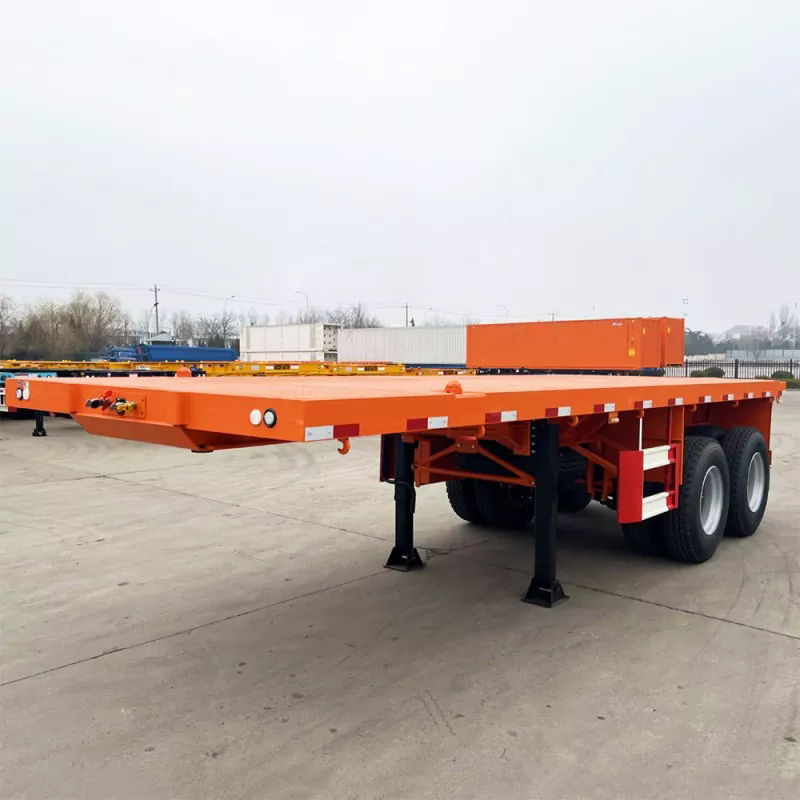
Table of Contents
- Content Outline
- What Is a Flatbed Trailer
- Key Customer Challenges in Cargo Transport
- How Flatbed Trailers Provide Practical Solutions
- Common Application Scenarios
- Structural Components and Load Design
- How to Choose the Right Flatbed Trailer
- Flatbed Trailer Configuration Overview
- Frequently Asked Questions
- Conclusion and Business Contact
Content Outline
- Fundamental definition and operating concept of flatbed trailers
- Industry-level transportation challenges faced by cargo owners
- Design-based solutions offered by flatbed trailer structures
- Use cases across construction, manufacturing, and logistics
- Key parameters to evaluate before purchasing
- Practical answers to common buyer and operator questions
What Is a Flatbed Trailer
A flatbed trailer is a transport platform featuring an open deck without fixed sides or a roof. This configuration allows cargo to be loaded and unloaded from all directions, including the top, making it particularly suitable for large, heavy, or irregularly shaped goods. Flatbed trailers are typically manufactured using high-strength steel frames and reinforced flooring to ensure durability under demanding operating conditions.
Unlike box or container trailers, flatbed trailers prioritize accessibility and load adaptability. This structural simplicity translates into higher efficiency for industries that require frequent loading of non-standard cargo.
Key Customer Challenges in Cargo Transport
Cargo owners and logistics operators frequently encounter limitations when transporting oversized or heavy goods. Common challenges include:
- Restricted loading access caused by enclosed trailer walls
- Difficulty securing irregular or non-palletized cargo
- Weight distribution issues affecting transport safety
- Time-consuming loading and unloading procedures
- Compliance concerns related to road regulations and load stability
These issues often result in higher operational costs, delays, and increased safety risks during transport.
How Flatbed Trailers Provide Practical Solutions
Flatbed trailers are engineered to directly address the above challenges through functional design and material strength.
- Open Loading Platform: Enables crane, forklift, or side loading without spatial constraints.
- High Load Capacity: Reinforced beams and axles support heavy industrial equipment.
- Flexible Securing Options: Multiple lashing points allow stable fixation of diverse cargo shapes.
- Operational Efficiency: Faster loading reduces idle time and labor costs.
- Route Adaptability: Suitable for long-distance and cross-regional transport.
These advantages make flatbed trailers a practical and cost-effective solution for complex transportation tasks.
Common Application Scenarios
Flatbed trailers are used across multiple sectors where cargo dimensions or weight exceed conventional transport limits.
- Construction materials such as steel beams, pipes, and prefabricated components
- Heavy machinery including excavators, loaders, and industrial equipment
- Manufacturing outputs such as large molds and mechanical assemblies
- Infrastructure projects requiring long or oversized cargo transport
Their adaptability allows logistics planners to manage diverse freight profiles with a single trailer type.
Structural Components and Load Design
Understanding the structural composition of a flatbed trailer is essential for evaluating performance and safety.
- Main Frame: High-tensile steel structure supporting overall load integrity
- Deck Surface: Anti-slip steel or hardwood flooring designed for heavy loads
- Axle System: Multi-axle configurations to ensure balanced weight distribution
- Suspension: Mechanical or air suspension for improved road stability
- Braking System: Integrated braking for enhanced transport control
Flatbed Trailer Configuration Overview
| Configuration Type | Typical Load Capacity | Primary Use Case |
|---|---|---|
| 2-Axle Flatbed Trailer | 20–30 Tons | Medium-duty cargo and regional transport |
| 3-Axle Flatbed Trailer | 30–60 Tons | Heavy machinery and long-distance hauling |
| Extendable Flatbed Trailer | Variable | Extra-long cargo such as wind blades or beams |
How to Choose the Right Flatbed Trailer
Selecting an appropriate flatbed trailer requires evaluating operational requirements and regulatory conditions.
- Determine maximum cargo weight and dimensions
- Assess road conditions and transport distance
- Confirm axle configuration and suspension suitability
- Verify material quality and welding standards
- Ensure compatibility with local transport regulations
Manufacturers such as Shandong Derun Vehicle provide customized flatbed trailer solutions to match diverse logistics demands.
Frequently Asked Questions
Q1: Is a flatbed trailer suitable for long-distance transport?
Yes. When properly configured with reinforced axles and reliable suspension systems, flatbed trailers perform effectively in long-haul operations.
Q2: How is cargo secured on a flatbed trailer?
Cargo is secured using chains, straps, and tensioning devices attached to designated lashing points along the trailer frame.
Q3: Can flatbed trailers be customized?
Flatbed trailers can be customized in terms of length, axle count, load capacity, and deck material to suit specific transport requirements.
Conclusion and Business Contact
A flatbed trailer remains a foundational asset in modern logistics due to its flexibility, structural reliability, and ability to transport challenging cargo types. By understanding design principles, application scenarios, and selection criteria, businesses can significantly improve transport efficiency and risk control.
Shandong Derun Vehicle continues to support global transportation projects with durable and adaptable flatbed trailer solutions. For detailed specifications, tailored configurations, and professional support, please contact us to explore how the right flatbed trailer can enhance your logistics operations.