

How Does a Motorcycle Control Cable Affect Riding Performance and Safety?
2026-01-21
Article Summary
A motorcycle control cable is a critical mechanical component that directly influences throttle response, clutch engagement, braking accuracy, and overall riding safety. Improper cable selection, poor maintenance, or substandard materials can lead to delayed response, rider fatigue, or even mechanical failure. This article provides a structured and in-depth explanation of how motorcycle control cables work, common customer pain points, selection criteria, material differences, maintenance practices, and real-world applications. The goal is to help buyers, distributors, and motorcycle owners make informed decisions based on performance, durability, and safety considerations.
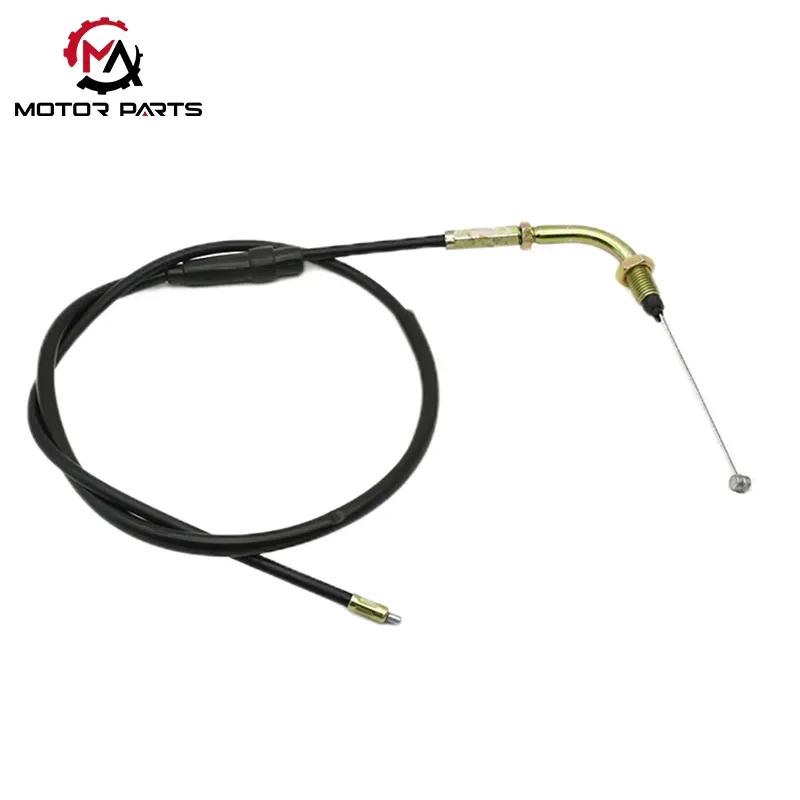
Table of Contents
- Content Outline
- What Is a Motorcycle Control Cable?
- Key Customer Pain Points
- Main Types of Motorcycle Control Cables
- Materials and Construction Explained
- How to Choose the Right Control Cable
- Maintenance and Service Life
- Technical Parameters Overview
- Frequently Asked Questions
- Conclusion and Contact Information
Content Outline
- Definition and working principle of motorcycle control cables
- Common problems riders and buyers encounter
- Comparison of different cable types and applications
- Material, structure, and manufacturing considerations
- Selection guidelines for different motorcycle models
- Maintenance practices and replacement indicators
- Answers to common technical and purchasing questions
What Is a Motorcycle Control Cable?
A motorcycle control cable is a flexible mechanical transmission component used to transfer rider input to specific motorcycle systems. By converting hand or foot movement into controlled mechanical action, control cables enable precise operation of throttles, clutches, brakes, chokes, and speedometers.
Unlike electronic systems, control cables rely on inner wire movement within an outer sheath. This simplicity makes them reliable and cost-effective, but also places high demands on material quality, internal lubrication, and structural accuracy.
Key Customer Pain Points
- Delayed response: Low-quality inner wires or excessive friction reduce responsiveness.
- Premature wear: Inferior coatings and poor sealing lead to corrosion and fraying.
- Inconsistent feel: Uneven cable tension affects riding comfort and control precision.
- Compatibility issues: Incorrect length or fittings cause installation difficulties.
Main Types of Motorcycle Control Cables
Different riding functions require different control cable designs. Each type is optimized for load, movement frequency, and response sensitivity.
- Throttle Cable: Controls engine speed by regulating airflow or fuel delivery.
- Clutch Cable: Transfers lever force to disengage engine power from transmission.
- Brake Cable: Commonly used in drum brake systems for rear or front braking.
- Choke Cable: Assists cold engine starting by adjusting fuel mixture.
- Speedometer Cable: Transmits wheel rotation data to mechanical gauges.
Materials and Construction Explained
High-performance motorcycle control cables are engineered using multi-layer structures designed for durability and smooth operation.
- Inner Wire: Typically stainless steel or high-carbon steel for tensile strength.
- Inner Liner: Low-friction materials such as nylon or PTFE reduce resistance.
- Outer Casing: Steel wire reinforcement with PVC or rubber coating for protection.
- End Fittings: Precision-machined terminals ensure secure connection and alignment.
How to Choose the Right Control Cable
Selecting the correct motorcycle control cable requires evaluating both technical specifications and real-world usage conditions.
- Confirm cable length, routing path, and end fitting compatibility
- Match load capacity to throttle or clutch force requirements
- Consider environmental exposure such as moisture, dust, and heat
- Prioritize smooth operation and fatigue resistance for daily riding
Professional suppliers such as Max Trading provide motorcycle control cables designed to meet consistent quality and dimensional standards, supporting both OEM and aftermarket needs.
Maintenance and Service Life
Even premium motorcycle control cables require regular inspection and maintenance to maintain performance and safety.
- Lubricate cables periodically to minimize internal friction
- Inspect for fraying, stiffness, or abnormal resistance
- Replace cables showing corrosion, broken strands, or uneven movement
- Avoid sharp bends during installation to prevent premature fatigue
Technical Parameters Overview
| Parameter | Typical Specification |
|---|---|
| Cable Length | Custom or standard sizes based on motorcycle model |
| Inner Wire Diameter | 1.2 mm – 2.5 mm |
| Outer Sheath Material | PVC, Rubber, Reinforced Steel |
| Operating Temperature | -30°C to 120°C |
| Application | Throttle, Clutch, Brake, Choke |
Frequently Asked Questions
Q: How often should a motorcycle control cable be replaced?
A: Replacement intervals depend on usage and environment, but inspection is recommended every 6–12 months, with replacement at the first sign of wear.
Q: Can one control cable fit multiple motorcycle models?
A: While some universal cables exist, model-specific cables provide better fitment, smoother operation, and longer service life.
Q: What causes stiff or hard-to-pull control cables?
A: Common causes include internal corrosion, lack of lubrication, excessive bending, or damaged inner liners.
Conclusion and Contact Information
A motorcycle control cable may appear simple, but its design, materials, and installation directly affect riding safety and performance. By understanding cable types, construction standards, and maintenance requirements, buyers and riders can reduce failure risks and improve riding confidence.
Max Trading supplies reliable motorcycle control cable solutions for a wide range of applications, supporting consistent performance and long-term durability. For tailored specifications, technical assistance, or bulk purchasing inquiries, please contact us to discuss how the right control cable solution can support your business or riding needs.