

How Does a Rear Bumper Bracket Support Vehicle Safety and Fitment?
2026-01-05
Article Abstract
A rear bumper bracket is a structural automotive component designed to secure and align the rear bumper assembly with the vehicle body. This article provides a comprehensive overview of rear bumper brackets, focusing on how they function, how to evaluate specifications, and how they integrate into modern vehicle architectures. It also addresses common technical questions, discusses material and manufacturing considerations, and examines future development directions within the global automotive aftermarket. The content is structured to support search visibility while meeting professional technical reading standards.
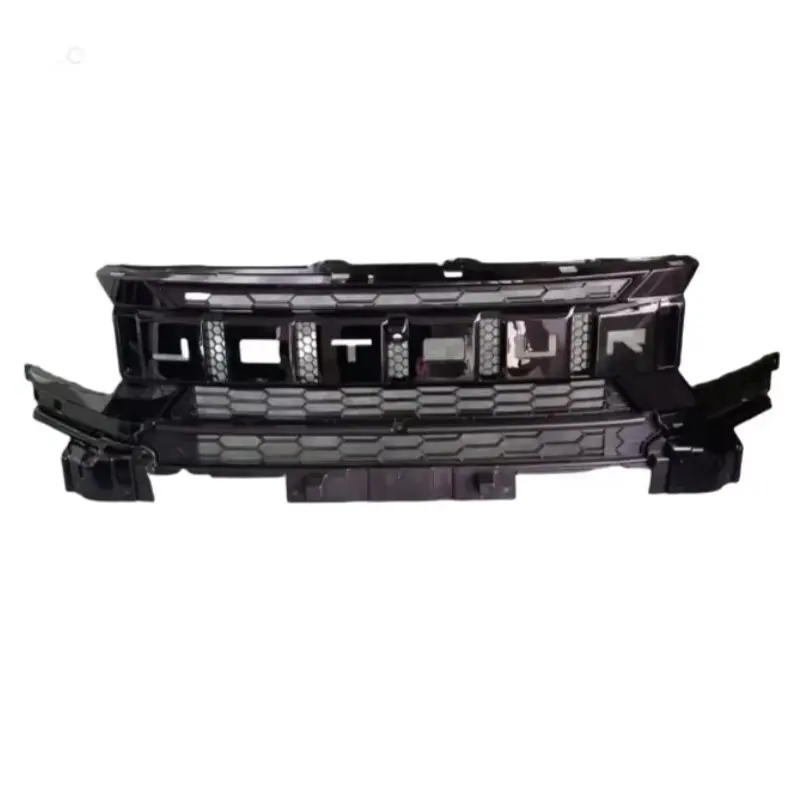
Table of Contents
- How Is a Rear Bumper Bracket Defined and Positioned?
- How Do Technical Parameters Determine Rear Bumper Bracket Performance?
- How Can Common Rear Bumper Bracket Questions Be Answered Clearly?
- How Will Rear Bumper Brackets Evolve in the Automotive Aftermarket?
Outline
- Structural role of the rear bumper bracket
- Core parameters and engineering considerations
- Application-based problem solving and FAQs
- Industry trends and brand positioning
How Is a Rear Bumper Bracket Defined and Positioned?
A rear bumper bracket is a load-bearing mounting component installed between the rear bumper cover and the vehicle’s body frame or rear impact beam. Its primary purpose is to ensure that the bumper assembly maintains correct alignment, structural integrity, and positional stability under both static and dynamic conditions.
From an engineering standpoint, the rear bumper bracket acts as an intermediary interface. It transfers loads generated during minor impacts, vibrations, and long-term vehicle operation away from cosmetic components and toward structural zones designed to absorb or distribute stress. Without a properly designed rear bumper bracket, even a well-engineered bumper cover cannot achieve consistent fitment or durability.
In most passenger vehicles, rear bumper brackets are positioned laterally at both ends of the bumper assembly, with additional center supports depending on vehicle width and bumper architecture. These brackets must accommodate tight dimensional tolerances to ensure flush alignment with body panels, tail lamps, and trunk or tailgate openings.
From a market perspective, the rear bumper bracket is categorized as a high-turnover replacement part in the automotive aftermarket. Exposure to road debris, moisture, temperature fluctuation, and minor collisions makes it a frequent service item. As a result, precision manufacturing and material stability are critical selection criteria for distributors and repair facilities.
How Do Technical Parameters Determine Rear Bumper Bracket Performance?
Evaluating a rear bumper bracket requires attention to measurable technical parameters rather than visual similarity alone. Dimensional accuracy, material composition, and mounting geometry collectively determine whether the component can deliver consistent performance across different vehicle models and operating environments.
Below is a consolidated overview of key technical parameters commonly used to assess rear bumper brackets in professional procurement and quality control processes.
| Parameter | Description | Engineering Relevance |
|---|---|---|
| Material Type | PP, ABS, reinforced plastic, or stamped steel | Determines impact resistance, weight, and corrosion behavior |
| Dimensional Tolerance | Typically ±0.5 mm to ±1.0 mm | Ensures proper alignment with bumper cover and body panels |
| Mounting Hole Geometry | OEM-matched hole diameter and spacing | Prevents installation stress and fastener fatigue |
| Operating Temperature Range | -40°C to +90°C (typical) | Maintains structural stability under climate variation |
| Surface Finish | Matte, coated, or treated | Improves durability and reduces environmental degradation |
Material selection remains one of the most critical decisions in rear bumper bracket design. Polymer-based brackets are favored for their lightweight properties and corrosion resistance, while metal brackets are often specified for vehicles requiring higher structural rigidity or towing capability. In both cases, reinforcement ribs and stress-relief contours are integrated to prevent cracking or deformation over time.
Another essential parameter is compatibility. Rear bumper brackets are vehicle-specific components, meaning even minor deviations in geometry can lead to misalignment, uneven gaps, or long-term vibration noise. For this reason, professional suppliers rely on OEM reference data and vehicle scanning to maintain dimensional fidelity.
How Can Common Rear Bumper Bracket Questions Be Answered Clearly?
In procurement, installation, and after-sales service, several recurring questions arise regarding rear bumper brackets. Addressing these questions systematically helps reduce installation errors and improves overall component reliability.
Q: How does a rear bumper bracket differ from a rear bumper reinforcement?
A rear bumper bracket primarily serves as a mounting and alignment component, whereas a rear bumper reinforcement is designed to absorb and distribute impact energy. The bracket supports positioning and stability, while the reinforcement focuses on crash performance.
Q: How can compatibility of a rear bumper bracket be verified before installation?
Compatibility is verified by cross-referencing OEM part numbers, vehicle model years, and body configurations. Visual comparison alone is insufficient; mounting hole spacing, curvature, and depth must match vehicle specifications precisely.
Q: How does material choice affect long-term durability?
Material choice directly affects resistance to temperature fluctuation, moisture, and vibration. High-quality polymers resist corrosion and fatigue, while treated metals offer higher load tolerance. Inadequate material selection can result in cracking, deformation, or premature failure.
Q: How does a damaged rear bumper bracket impact overall vehicle performance?
A damaged bracket can cause bumper misalignment, increased vibration noise, uneven panel gaps, and reduced effectiveness of the bumper system during low-speed impacts. Over time, this may also stress adjacent components.
How Will Rear Bumper Brackets Evolve in the Automotive Aftermarket?
The future development of rear bumper brackets is closely aligned with broader trends in vehicle design, manufacturing efficiency, and sustainability. As vehicles continue to adopt modular architectures, bumper systems are becoming more integrated, placing higher demands on bracket precision and adaptability.
Lightweighting remains a dominant trend. Advanced polymer blends and fiber-reinforced plastics are increasingly used to reduce overall vehicle weight while maintaining structural performance. These materials also support more complex geometries, enabling better load distribution and vibration control.
Digital manufacturing technologies are also reshaping the aftermarket. CAD-driven tooling, 3D scanning, and automated quality inspection allow suppliers to maintain tighter tolerances and faster development cycles. This directly benefits rear bumper bracket consistency across different production batches.
From a supply chain perspective, global distributors are prioritizing suppliers with stable production capacity, traceable quality systems, and responsive customization capabilities. In this context, Ningbo YC has established itself as a reliable manufacturer and exporter of automotive body components, including rear bumper brackets engineered to meet international market requirements.
For businesses seeking dependable rear bumper bracket solutions with consistent specifications and professional technical support, collaboration with an experienced supplier is essential. To learn more about product availability, technical data, or customization options, contact us to discuss specific application requirements and sourcing objectives.