
Article Summary: A Tension Wheel is a critical component in a heavy-duty truck's belt drive system. It maintains appropriate belt tension, helps prevent slippage and vibration, and supports the reliable operation of accessories such as alternators, water pumps, air-conditioning compressors, and other engine-driven components. When the tension wheel becomes worn or incorrectly matched, belt noise, misalignment, accelerated wear, overheating, and unexpected vehicle downtime can follow. This guide explains how a Tension Wheel works, why it matters, what failure symptoms to watch for, how to select the right replacement, and how proper maintenance can extend the service life of the complete belt drive system.
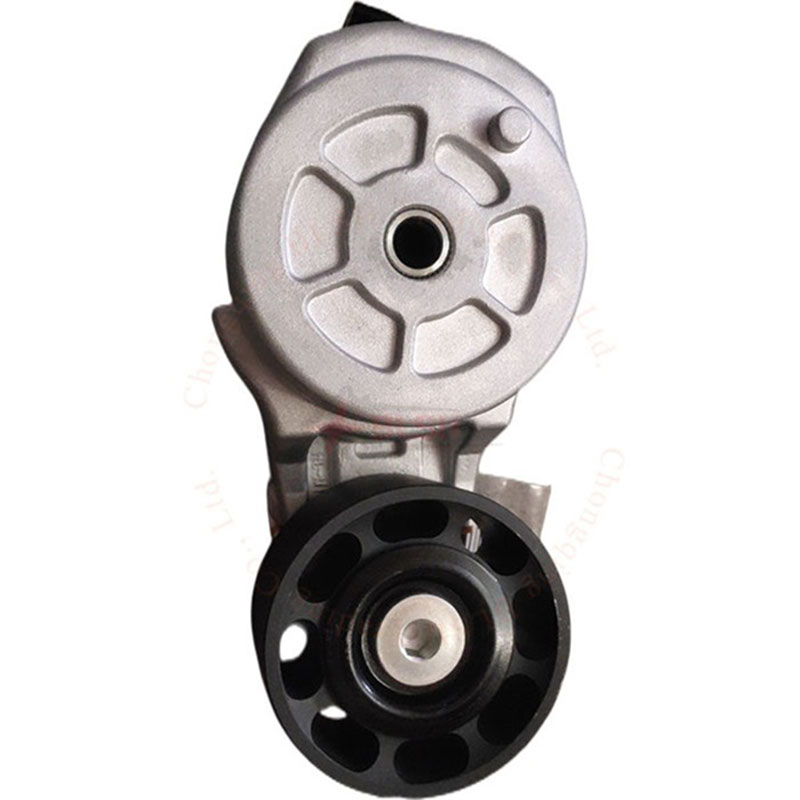
Table of Contents
- What Is a Tension Wheel?
- How Does a Tension Wheel Work?
- Why Is a Tension Wheel Important for Heavy-Duty Trucks?
- What Are the Main Components of a Tension Wheel?
- What Benefits Can a High-Quality Tension Wheel Provide?
- What Are the Signs of a Failing Tension Wheel?
- How Should You Select the Right Tension Wheel?
- How Can You Maintain a Tension Wheel?
- When Should a Tension Wheel Be Replaced?
- What Should Buyers Look for in a Tension Wheel Supplier?
- Tension Wheel Selection Checklist
- Frequently Asked Questions
- Conclusion
Article Outline
- Understanding the function of the Tension Wheel in the engine accessory drive system.
- Explaining automatic tension control and belt-load management.
- Identifying common symptoms associated with worn tension wheels.
- Providing practical guidance for replacement-part selection.
- Explaining inspection and maintenance practices for fleet operators and workshops.
- Highlighting the importance of dimensional accuracy, bearing quality, material selection, and supplier reliability.
What Is a Tension Wheel?
A Tension Wheel is a mechanical component used in an engine accessory belt drive system to maintain the correct amount of tension on a drive belt. In heavy-duty trucks, the belt may transfer engine power to several accessories, including the alternator, water pump, air-conditioning compressor, power steering system, and other auxiliary equipment.
The belt cannot simply be installed with a fixed amount of tension and expected to remain at that level throughout its service life. Belts naturally experience dimensional changes because of operating temperature, material fatigue, repeated flexing, environmental exposure, and normal aging. Engine vibration and changes in accessory load can also affect belt behavior.
The Tension Wheel compensates for these changes by applying controlled pressure to the belt. Depending on the design, the assembly can incorporate a spring mechanism, tension arm, pulley, bearing, bushing, damping elements, seals, and mounting hardware.
For commercial vehicles that operate for long hours under heavy loads, this relatively compact component has an important role in maintaining stable accessory drive performance.
How Does a Tension Wheel Work?
The basic operating principle is straightforward: the Tension Wheel applies controlled force to the belt so that the belt remains sufficiently tight while the engine and accessories operate under changing conditions.
When a belt gradually stretches or its effective length changes because of temperature, the tensioning mechanism moves to compensate. This helps maintain contact between the belt and the pulleys. At the same time, the tensioner can accommodate small changes in belt movement and reduce excessive vibration.
A typical operating sequence can be understood as follows:
- The engine rotates the main drive pulley.
- The belt transfers rotational power to multiple accessories.
- The Tension Wheel applies controlled force against the belt.
- The tensioning mechanism compensates for normal belt elongation and movement.
- The pulley bearing allows smooth rotation while minimizing friction.
- The complete system maintains stable belt tracking during engine operation.
The objective is not to create maximum belt tension. Excessive tension can increase load on bearings, shafts, and accessories. Insufficient tension, on the other hand, can cause belt slip and unstable accessory operation. A properly designed tensioning system therefore aims for a controlled operating range.
Why Is a Tension Wheel Important for Heavy-Duty Trucks?
Heavy-duty trucks operate in conditions that can place substantial demands on engine accessory systems. Long-distance transportation, construction, mining, logistics, and other commercial applications can expose components to high temperatures, dust, vibration, frequent load changes, and extended operating hours.
A properly functioning Tension Wheel helps the belt remain engaged with the drive pulleys. This matters because a single belt can influence the operation of several critical accessories.
- Alternator performance: Stable belt engagement helps the alternator receive consistent mechanical drive.
- Cooling system operation: Where the belt drives a water pump, correct belt behavior supports proper coolant circulation.
- Air-conditioning operation: The compressor depends on reliable mechanical power transmission.
- Power steering support: On applicable configurations, stable belt drive helps maintain steering-assist performance.
- Belt service life: Proper tension can reduce abnormal slipping, flutter, and uneven wear.
- Reduced downtime: Preventive replacement of worn tension components can reduce the risk of unexpected belt-drive problems.
For fleet operators, the importance extends beyond the price of the replacement component. An accessory belt problem can potentially result in a vehicle being removed from service, delaying deliveries and increasing repair costs.
What Are the Main Components of a Tension Wheel?
Although designs vary according to engine and vehicle application, a typical Tension Wheel assembly consists of several interacting components.
| Component | Primary Function | Why It Matters |
|---|---|---|
| Tensioning Arm | Transfers mechanical force to the pulley and belt | Controls the position and movement of the tensioning mechanism |
| Spring Mechanism | Generates controlled tension | Compensates for belt movement and normal dimensional changes |
| Pulley | Contacts and guides the belt | Supports stable belt tracking and power transmission |
| Bearing | Allows the pulley to rotate smoothly | Reduces friction and helps limit noise and heat generation |
| Bushing | Supports controlled movement of the tensioning arm | Helps maintain alignment and consistent mechanical movement |
| Sealing Elements | Help protect internal components | Reduce the risk of dust and contamination reaching sensitive parts |
Because these components work together, replacing only the visibly damaged part is not always sufficient. A worn bearing, loose bushing, contaminated belt, or damaged pulley can influence the performance of a newly installed tensioning assembly.
What Benefits Can a High-Quality Tension Wheel Provide?
Choosing a properly engineered Tension Wheel can contribute to more stable operation of the entire accessory drive system. The benefits are particularly relevant to commercial vehicle owners who need dependable performance over long operating cycles.
-
Consistent Belt Tension
A suitable tensioning mechanism helps maintain controlled belt loading as operating conditions change. This can reduce the likelihood of belt slack and excessive movement.
-
Improved Belt Tracking
Accurate pulley geometry and stable arm movement help keep the belt correctly positioned. Good tracking reduces the risk of edge wear, belt wandering, or belt displacement.
-
Lower Vibration and Noise
Excessive belt flutter can create squealing, chirping, or rattling noises. A properly functioning tensioning system helps stabilize belt movement and can contribute to quieter operation.
-
Protection of Related Components
Incorrect belt tension can place additional loads on accessory bearings and shafts. Maintaining appropriate tension helps distribute operating loads more effectively.
-
Reduced Maintenance Risk
A reliable tensioning mechanism reduces the need for repeated manual belt adjustment and helps technicians maintain a predictable maintenance schedule.
-
Better Fleet Availability
For commercial vehicles, avoiding preventable belt-drive failures can help reduce unscheduled workshop visits and vehicle downtime.
What Are the Signs of a Failing Tension Wheel?
A worn Tension Wheel does not always fail suddenly. In many cases, the engine provides warning signs that should be investigated before the condition becomes more serious.
| Warning Sign | Possible Cause | Recommended Action |
|---|---|---|
| Squealing or chirping | Belt slip, pulley wear, bearing problems, or inadequate tension | Inspect the belt and tensioning assembly promptly |
| Grinding or rough pulley rotation | Worn or damaged bearing | Check pulley bearing condition and replace the affected component |
| Belt moves off-center | Misalignment, worn bushing, damaged pulley, or mounting issue | Check belt alignment and the complete tensioning mechanism |
| Visible pulley damage | Mechanical wear, contamination, impact, or excessive belt load | Replace the damaged component and identify the underlying cause |
| Excessive tensioner movement | Weak spring, worn pivot components, or unstable belt operation | Inspect the tensioner and belt as a complete system |
| Repeated belt failure | Incorrect tension, misalignment, contamination, or accessory problems | Perform a complete belt-drive system inspection |
It is important not to assume that every belt noise originates from the tension wheel. Accessory bearings, idler pulleys, contaminated belts, incorrect installation, and pulley alignment problems can produce similar symptoms. A systematic inspection is therefore preferable to replacing parts based solely on noise.
How Should You Select the Right Tension Wheel?
Choosing a Tension Wheel based only on its external appearance can create compatibility problems. The correct replacement should match the vehicle, engine, belt system, mounting configuration, and operating requirements.
Before ordering, buyers should verify the following information:
- Engine model: Confirm the exact engine family and configuration.
- Vehicle application: Check the truck model and production configuration.
- OEM or reference number: Use the original component number whenever available.
- Mounting dimensions: Verify mounting holes, bolt pattern, and installation position.
- Pulley dimensions: Check pulley diameter, width, profile, and belt compatibility.
- Belt routing: Confirm that the replacement component matches the existing belt path.
- Bearing configuration: Make sure the bearing design is suitable for the intended operating conditions.
- Operating environment: Consider temperature, dust, moisture, vibration, and vehicle duty cycle.
- Supplier consistency: For fleet and wholesale purchases, evaluate batch consistency and quality-control practices.
For international buyers, accurate application information is especially important. A component that appears similar may still have differences in dimensions, mounting geometry, pulley specifications, or internal construction.
How Can You Maintain a Tension Wheel?
Routine inspection is one of the simplest ways to identify tensioning problems before they develop into larger belt-drive failures. Maintenance procedures should follow the vehicle and engine manufacturer's requirements, but several practical inspection points are widely useful.
-
Inspect the belt surface.
Look for cracks, glazing, fraying, missing material, oil contamination, or unusual wear patterns.
-
Check pulley alignment.
The belt should remain properly aligned with the pulley system. Edge wear or belt wandering can indicate an alignment problem.
-
Listen for abnormal noise.
Squealing, chirping, grinding, or rattling noises around the accessory drive area should not be ignored.
-
Check pulley rotation.
During an appropriate service inspection, technicians should check for roughness, excessive resistance, or abnormal play according to safe workshop procedures.
-
Look for contamination.
Oil, coolant, fuel, and other fluids can affect belt materials and pulley surfaces. The source of contamination should be corrected rather than simply cleaning the belt.
-
Inspect related components.
When replacing a tension wheel, examine the belt, idler pulleys, accessory bearings, and mounting points to avoid transferring an existing problem to the new component.
Preventive inspection is particularly valuable for trucks operating in severe environments such as construction sites, mining operations, agricultural applications, and areas with high levels of dust or extreme temperatures.
When Should a Tension Wheel Be Replaced?
There is no single replacement interval that applies to every truck, because service life depends on engine design, operating conditions, belt quality, environmental exposure, maintenance practices, and vehicle usage.
Instead of relying only on mileage, fleet managers should combine scheduled inspection with condition-based replacement. Replacement should be considered when there is evidence of bearing deterioration, excessive play, damaged pulley surfaces, abnormal arm movement, spring weakness, persistent belt misalignment, or other mechanical defects.
It is also sensible to inspect the complete accessory belt drive when a belt is being replaced. If the old belt has experienced severe wear because of misalignment or tension problems, installing a new belt without correcting the underlying issue may lead to premature failure.
For vehicles operating under severe duty cycles, inspection intervals may need to be shorter than those used for trucks operating under moderate conditions.
What Should Buyers Look for in a Tension Wheel Supplier?
For distributors, repair shops, fleet operators, and truck-parts wholesalers, supplier selection can have a direct impact on purchasing efficiency and product consistency. The lowest unit price is not necessarily the lowest total cost if inconsistent components create installation problems, returns, or vehicle downtime.
A dependable supplier should be able to provide clear product information and practical support regarding application, dimensions, packaging, inspection, and customization requirements.
Shandong Shengkunda Import and Export Trading Co., Ltd. focuses on supplying truck parts for commercial vehicle applications and can support buyers looking for dependable replacement components and suitable sourcing solutions.
When evaluating a potential supplier, consider these factors:
- Clear product specifications and application information.
- Stable manufacturing and inspection procedures.
- Consistent dimensional accuracy between production batches.
- Reliable bearing and pulley performance.
- Appropriate packaging for international transportation.
- OEM, aftermarket, or customized sourcing capability where required.
- Responsive technical and sales communication.
- Ability to support wholesale and repeat purchasing requirements.
For buyers managing multiple truck models, supplier communication is particularly important. Providing the engine model, vehicle model, original part number, photographs, dimensions, and required quantity can help reduce the risk of ordering an incompatible component.
Tension Wheel Selection Checklist
| Evaluation Item | What to Check | Buyer Priority |
|---|---|---|
| Application Compatibility | Engine, truck model, belt system, and reference number | Essential |
| Dimensions | Mounting points, pulley diameter, width, and geometry | Essential |
| Bearing Quality | Smooth operation, suitable load capacity, and durability | High |
| Pulley Quality | Correct belt profile, surface finish, and dimensional stability | High |
| Tension Mechanism | Stable spring force and controlled movement | High |
| Environmental Resistance | Resistance to dust, temperature, moisture, and vibration | High for severe duty |
| Quality Inspection | Dimensional, functional, visual, and assembly checks | High |
| Packaging | Protection from impact, moisture, and contamination during shipping | Medium to High |
| Supplier Support | Technical communication, customization, and after-sales service | High for wholesale buyers |
Frequently Asked Questions
Q1: What is the main purpose of a Tension Wheel?
The primary purpose is to maintain controlled tension on the engine accessory belt. This helps the belt remain properly engaged with the pulleys while accommodating normal belt movement and operating-condition changes.
Q2: Can a worn Tension Wheel damage the belt?
Yes. A worn bearing, damaged pulley, weak tension mechanism, or misaligned assembly can contribute to abnormal belt movement and uneven wear. If a belt repeatedly fails, the complete tensioning and pulley system should be inspected.
Q3: What causes a Tension Wheel to wear prematurely?
Common factors include high operating temperatures, heavy vibration, dust or contamination, incorrect belt tension, pulley misalignment, worn mating components, poor installation, and normal mechanical fatigue.
Q4: Should the belt be replaced together with the Tension Wheel?
Not every replacement requires both components to be changed, but inspecting the belt at the same time is strongly recommended. If the belt is already worn, contaminated, cracked, or damaged, replacing it together with the tensioning component can provide a more reliable system-level repair.
Q5: How can I confirm that a replacement Tension Wheel will fit my truck?
Provide the supplier with the truck model, engine model, original part number, pulley dimensions, mounting information, and available photographs or technical drawings. Comparing these details before ordering can significantly reduce compatibility problems.
Q6: Is a Tension Wheel only used on heavy-duty trucks?
No. Tensioning devices are used in many belt-driven mechanical systems. However, heavy-duty truck applications place particularly demanding requirements on component durability because vehicles may operate for long periods under high loads and challenging environmental conditions.
Q7: What should I do if the new Tension Wheel still produces noise?
Do not assume the tension wheel itself is defective. Check belt routing, pulley alignment, belt condition, accessory bearings, mounting torque, contamination, and other components in the belt-drive system. A system-level inspection can help identify the actual source of the noise.
Q8: Why is dimensional accuracy important for a Tension Wheel?
Dimensional accuracy affects mounting position, pulley alignment, belt tracking, and tensioner movement. Even a small dimensional difference can cause installation difficulties or abnormal belt wear in applications with tight mechanical tolerances.
Q9: What information should wholesale buyers provide when requesting a quotation?
Useful information includes the required quantity, truck and engine models, original part numbers, target market, packaging requirements, customization requirements, and expected purchasing frequency. Supplying complete information helps the supplier prepare a more accurate solution.
Conclusion
A Tension Wheel may be a relatively small component, but its role in maintaining stable belt-drive performance is significant. By controlling belt tension, supporting proper belt tracking, reducing excessive movement, and helping protect related engine accessories, a reliable tensioning assembly contributes to the overall operating stability of a commercial vehicle.
For fleet operators and repair workshops, the best approach is to treat the Tension Wheel as part of a complete belt-drive system rather than as an isolated replacement part. Correct application matching, accurate dimensions, reliable bearings, suitable pulley construction, proper installation, and regular inspection all contribute to dependable performance.
For distributors and truck-parts buyers, supplier capability is equally important. A reliable sourcing partner should understand the practical requirements of commercial vehicle components and provide consistent products, accurate application information, professional communication, and appropriate support for repeat orders.
Shandong Shengkunda Import and Export Trading Co., Ltd. is ready to support customers seeking Tension Wheel solutions for heavy-duty truck applications. Whether you are purchasing replacement parts for a repair workshop, building inventory for distribution, or looking for a long-term truck-parts supply partner, selecting the right component can help improve reliability and reduce avoidable maintenance problems.
Looking for a dependable Tension Wheel supplier or need help matching a replacement part to your truck application? Contact us today to discuss your requirements, product specifications, quantities, and customized sourcing needs.