

How Does Aluminum Tube Deliver Reliable Performance Across Modern Applications?
2026-10-08
Article Summary
Aluminum tube is a versatile engineering material used in structural assemblies, heat-transfer systems, transportation equipment, industrial machinery, furniture, construction, and many other products. Its combination of low weight, corrosion resistance, formability, thermal conductivity, and attractive surface appearance makes it a practical alternative to heavier metallic tubing in many applications.
This guide explains how to evaluate aluminum tube beyond simply looking at its outside diameter. Material grade, temper, wall thickness, tube geometry, manufacturing process, dimensional tolerances, surface condition, joining method, and intended operating environment can all influence final performance. Understanding these factors helps buyers avoid common problems such as deformation, premature corrosion, poor fit, inconsistent dimensions, or unnecessary material costs.
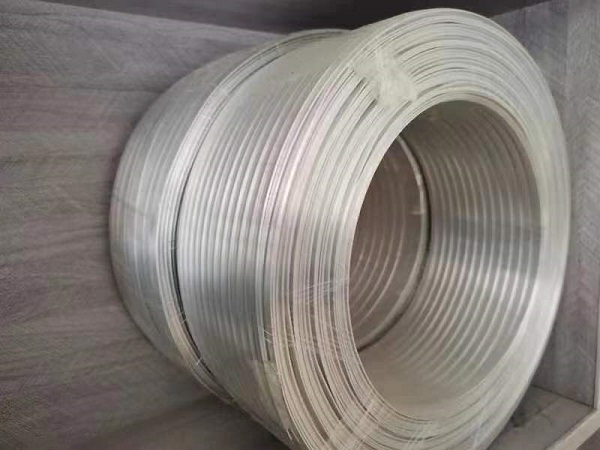
What Is Aluminum Tube?
Aluminum tube is a hollow aluminum or aluminum-alloy product manufactured in round, square, rectangular, oval, or other engineered profiles. Depending on the intended use, tubing can be extruded, drawn, welded, or produced through other specialized processes.
The word “aluminum tube” therefore describes a broad product category rather than one single specification. A lightweight tube for furniture may have very different requirements from a precision tube used in industrial equipment or a tube intended for pressure service.
Industry standards also distinguish between different manufacturing routes. For example, ASTM specifications cover seamless extruded tubes, drawn seamless tubes, and tubes intended for general-purpose applications. ASTM B241/B241M covers certain seamless pipe and seamless extruded tube products, while ASTM B210/B210M addresses drawn seamless aluminum tubes.
For buyers, this distinction matters because manufacturing method can influence dimensional accuracy, surface quality, mechanical properties, and suitability for a particular application.
Why Aluminum Tube Is Widely Used
Choosing tubing is rarely just about purchasing the lightest available material. Engineers typically balance weight, strength, corrosion resistance, appearance, fabrication requirements, service life, and total cost. Aluminum tube performs well across many of these areas.
| Property | Practical Benefit | Typical Consideration |
|---|---|---|
| Low density | Helps reduce component weight | Wall thickness still needs engineering verification |
| Corrosion resistance | Useful in many outdoor and humid environments | Surface and environmental exposure should be evaluated |
| Good formability | Supports bending, machining, and fabrication | Alloy and temper affect forming behavior |
| Thermal conductivity | Useful for heat-transfer applications | System design determines actual thermal performance |
| Surface versatility | Can support anodizing, coating, polishing, and other finishes | Finish requirements should be defined before production |
Another important advantage is design flexibility. Aluminum profiles can be produced in a wide range of dimensions and shapes, allowing manufacturers to integrate mounting features, grooves, ribs, or other geometry into a single extruded profile.
How to Select the Right Aluminum Tube
The most expensive mistake is not necessarily buying a high-priced tube. It can be buying a tube that technically fits the drawing but fails during bending, assembly, welding, pressure testing, or long-term service.
1. Define the Application First
Start with the working environment. Determine whether the tube will carry a load, transport fluid, transfer heat, serve as a structural frame, or function primarily as a decorative component.
2. Confirm Outside and Inside Dimensions
Outside diameter, inside diameter, wall thickness, length, and profile geometry should be clearly specified. For precision assemblies, dimensional tolerances can be just as important as nominal dimensions.
3. Determine the Required Alloy and Temper
Alloy selection affects strength, corrosion resistance, machinability, weldability, and formability. Temper designation further describes the condition of the material and can significantly influence mechanical performance.
4. Consider the Manufacturing Process
Extrusion is highly useful for producing complex profiles and long continuous sections. Drawing can provide tighter dimensional control and specific surface characteristics. Seamless construction may be important for particular pressure or performance requirements.
5. Specify the Surface Finish
If the tube will be visible, exposed to weather, or used in a product requiring a particular appearance, define the surface finish before placing the order. Anodizing, powder coating, polishing, brushing, and other finishing processes can produce different visual and functional results.
- Alloy and temper
- Outside diameter or profile dimensions
- Inside diameter and wall thickness
- Length and allowable tolerance
- Required mechanical properties
- Surface finish
- Cutting, bending, drilling, or machining requirements
- Packaging and protection requirements
- Applicable material or inspection standard
Common Aluminum Alloys and Tempers
There is no universally “best” aluminum alloy for every tube application. The appropriate material depends on the balance between strength, formability, corrosion resistance, machinability, weldability, and cost.
| Alloy Family / Example | General Characteristics | Potential Applications |
|---|---|---|
| 1xxx series | High aluminum content, good conductivity and corrosion resistance | General-purpose and thermal applications |
| 3xxx series | Good formability and useful corrosion resistance | General fabrication and heat-transfer uses |
| 6061 | Good combination of strength, machinability, and versatility | Structural components, machinery, frames |
| 6063 | Excellent extrusion characteristics and attractive surface finish | Architectural and decorative profiles |
| 6082 | Higher-strength structural option in many applications | Engineering and structural components |
These examples are only a starting point. Applicable standards should be checked against the actual alloy, temper, dimensions, and intended service. ASTM documentation, for instance, lists specific alloys and tempers together with corresponding mechanical requirements rather than treating all aluminum tubing as equivalent.
How Aluminum Tube Is Manufactured
Understanding production helps buyers communicate realistic specifications and identify where quality problems can occur.
Extrusion
During extrusion, heated aluminum material is pushed through a die to create a continuous profile. This process is especially valuable for complex cross-sections and long lengths. Depending on the alloy and required properties, subsequent heat treatment or other processing may be used.
Drawing
Drawing pulls tube through a die to reduce dimensions and improve dimensional control. ASTM B210/B210M describes drawn seamless aluminum tubes in straight lengths and coils for general-purpose and pressure applications.
Additional Processing
After the primary tube-forming process, manufacturers may perform cutting, straightening, machining, bending, drilling, flaring, deburring, heat treatment, or surface finishing. Each additional operation introduces another quality-control point.
Alloy verification and billet preparation.
Extrusion, drawing, or another specified method.
Cutting, straightening, machining, and surface treatment.
Dimensional, visual, mechanical, and application-specific checks.
Surface Finishing and Protection
Surface treatment is more than an aesthetic decision. It can influence corrosion resistance, wear behavior, cleanability, appearance, and compatibility with other components.
- Anodizing: Creates a controlled oxide layer and is frequently selected when appearance and surface durability are important.
- Powder coating: Provides a broad range of colors and a protective finish for many architectural and industrial applications.
- Polishing: Produces a smoother and more reflective appearance where visual presentation matters.
- Brushing: Creates a consistent directional surface texture.
- Mill finish: Retains the characteristic appearance of aluminum directly after manufacturing, subject to the production process.
The correct treatment depends heavily on the environment. Outdoor exposure, humidity, chemicals, abrasion, temperature, and contact with dissimilar metals should all be considered before specifying a finish.
Where Is Aluminum Tube Commonly Used?
Industrial Equipment
Used for machine frames, guards, supports, brackets, and fabricated assemblies where low weight and practical strength are valuable.
Automotive & Transportation
Suitable for selected structural, thermal, trim, and fluid-management components depending on the alloy and design.
Construction
Common in railings, frames, architectural structures, partitions, and other building-related systems.
Heat Transfer
Aluminum's thermal characteristics make suitable tubing valuable in selected cooling and heat-transfer systems.
Furniture
Lightweight tubing can be used for frames, legs, supports, display structures, and modular furniture.
Sports Equipment
Its weight-to-performance characteristics support applications such as frames, poles, and selected sporting components.
Drawn aluminum tubing is also used for general-purpose and climate-control applications, with ASTM B483/B483M specifically covering drawn tube and pipe for general-purpose applications and HVAC-related uses.
Quality and Inspection Considerations
Consistent quality begins with a clear specification. A supplier cannot reliably deliver a requirement that has never been defined.
Dimensional Inspection
Depending on the product, inspection may include outside diameter, inside diameter, wall thickness, profile dimensions, straightness, length, and other tolerances.
Material Verification
The alloy and temper should correspond to the purchase specification and relevant documentation. For demanding applications, buyers may require material certificates and additional testing.
Surface Inspection
Inspectors may check scratches, dents, oxidation, discoloration, extrusion marks, burrs, coating consistency, and other surface conditions according to the agreed acceptance criteria.
Mechanical and Application-Specific Testing
Where applicable, tensile properties, leak testing, flattening, flaring, corrosion-related testing, or other tests may be required. ASTM specifications identify particular test methods and requirements for different aluminum tube categories.
Common Aluminum Tube Purchasing Mistakes
- Specifying only the diameter. Diameter alone does not communicate alloy, temper, wall thickness, tolerance, or surface requirements.
- Choosing an alloy based only on price. A lower material cost can become expensive if the tube bends poorly, machines badly, or lacks the required strength.
- Ignoring the manufacturing method. Extruded and drawn tubes can have different characteristics and should not automatically be treated as interchangeable.
- Leaving tolerances undefined. Loose tolerances may cause assembly problems, while unnecessarily tight tolerances can increase production costs.
- Adding finishing requirements too late. Some finishes and subsequent operations need to be considered during initial production planning.
- Underestimating packaging. Long aluminum tubes can be vulnerable to scratches, bending, and surface damage during transportation if packaging is inadequate.
Give the supplier a complete technical requirement covering material, dimensions, tolerances, finish, processing, quantity, inspection requirements, packaging, and intended application. This reduces ambiguity and makes quotations easier to compare.
Frequently Asked Questions About Aluminum Tube
1. What is the main advantage of aluminum tube?
Its combination of low weight, corrosion resistance, formability, thermal conductivity, and design flexibility makes aluminum tube useful across many industries.
2. Is aluminum tube suitable for structural applications?
Yes, selected aluminum alloys and tempers are widely used in structural and semi-structural applications. The required alloy, wall thickness, geometry, loading conditions, joining method, and safety factors should be evaluated by the responsible engineer.
3. What is the difference between extruded and drawn aluminum tube?
Extrusion creates the tube or profile by forcing aluminum through a die, making it particularly useful for continuous and complex shapes. Drawing further reduces tube dimensions through a die and can provide tighter dimensional characteristics for suitable products.
4. Which aluminum alloy is best for tubing?
There is no single best alloy. The right selection depends on strength, corrosion resistance, formability, machinability, weldability, surface requirements, temperature, and application conditions.
5. Can aluminum tube be bent?
Many aluminum tubes can be bent, but bending performance depends on alloy, temper, wall thickness, tube diameter, tooling, bend radius, and process control. A tube selected for easy bending may have different mechanical properties from one optimized primarily for strength.
6. Can aluminum tube be anodized?
Yes. Suitable aluminum alloys can be anodized to improve surface characteristics and provide a controlled appearance. However, alloy composition, surface preparation, anodizing parameters, and required appearance should be considered before production.
7. What information should I provide when requesting an aluminum tube quotation?
Provide the alloy and temper, dimensions, wall thickness, length, tolerances, quantity, surface finish, processing requirements, applicable standards, inspection requirements, packaging expectations, and intended application whenever possible.
8. Why do aluminum tube dimensions sometimes vary between suppliers?
Differences can result from alloy, manufacturing process, tooling, dimensional tolerances, finishing operations, measurement methods, and the exact product standard. A clear drawing and defined tolerances help eliminate uncertainty.
A Smarter Way to Plan Your Aluminum Tube Project
The best aluminum tube is not simply the one with the lowest price or the highest strength. It is the tube whose material, dimensions, manufacturing route, surface treatment, and quality requirements match the real demands of the finished product.
Before purchasing, translate the application into measurable requirements. Decide what the tube must withstand, how it will be processed, what tolerances are genuinely necessary, how it will be finished, and what inspection documentation is required. This approach helps reduce material waste, avoid production delays, and create more consistent finished assemblies.
For projects requiring dependable material selection and customized aluminum tube solutions, Majestic can help you evaluate the technical details and develop a specification aligned with your application.
Ready to Discuss Your Aluminum Tube Requirements?
Share your drawings, dimensions, alloy requirements, quantity, and application details with Majestic. Our team can help you move from an initial requirement to a practical tubing solution.
Need a reliable aluminum tube solution? Contact us today.