

How Does Automotive Grille Improve Vehicle Performance?
2026-02-09
Abstract
An automotive grille is more than a visual signature on the front of a vehicle. It plays a critical role in airflow management, engine cooling, component protection, and brand differentiation. For manufacturers, distributors, and vehicle owners, selecting the right automotive grille directly affects durability, efficiency, and long-term operating costs. This article provides a structured and practical explanation of how automotive grilles work, what problems they solve, and how to choose the most suitable solution for different vehicle applications.
Outline
- Overview of Automotive Grille Functions
- Common Customer Pain Points in Grille Selection
- Key Types of Automotive Grilles
- Materials and Manufacturing Considerations
- Performance, Safety, and Aesthetics Balance
- Selection Checklist for Different Vehicle Scenarios
- Frequently Asked Questions
Table of Contents
- 1. What Is an Automotive Grille?
- 2. Customer Challenges with Automotive Grilles
- 3. Main Types of Automotive Grilles
- 4. Materials and Structural Design
- 5. How Automotive Grilles Enhance Performance
- 6. Application-Based Selection Guide
- 7. FAQs
1. What Is an Automotive Grille?
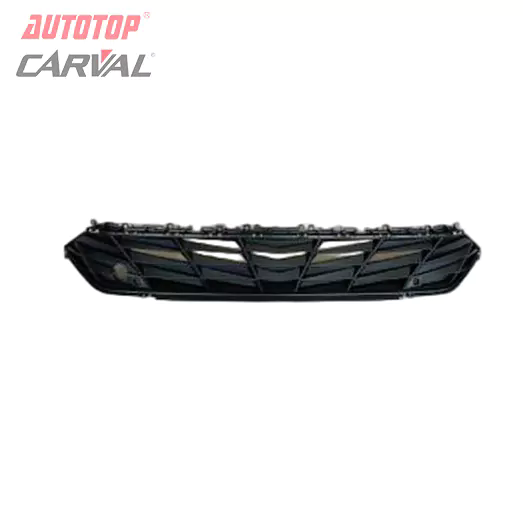
An automotive grille is the front-facing component that allows air to flow into the engine bay while shielding critical parts such as the radiator, condenser, and intercooler. Modern grilles are engineered to balance airflow efficiency, structural strength, and exterior styling. In electric and fuel vehicles alike, grille design has evolved into a functional system rather than a purely decorative element.
2. Customer Challenges with Automotive Grilles
Customers often encounter several issues when sourcing or upgrading automotive grilles:
- Insufficient airflow leading to overheating
- Poor material quality causing cracking or deformation
- Incompatibility with sensors or cameras
- Short service life under extreme weather conditions
- Inconsistent appearance across vehicle models
Addressing these challenges requires a grille solution that integrates engineering precision with application-specific requirements.
3. Main Types of Automotive Grilles
| Grille Type | Primary Feature | Typical Application |
|---|---|---|
| Mesh Grille | High airflow efficiency | Performance and sports vehicles |
| Horizontal Slat Grille | Balanced airflow and strength | Sedans and SUVs |
| Vertical Bar Grille | Strong visual identity | Luxury and off-road vehicles |
| Active Grille System | Adaptive airflow control | Fuel-efficient modern vehicles |
4. Materials and Structural Design
Material selection determines the durability and performance of an automotive grille. Common materials include ABS plastic, polypropylene, aluminum, and composite materials. Structural reinforcement is essential to withstand debris impact, vibration, and temperature fluctuations.
- ABS plastic offers excellent molding precision and surface finish
- Metal grilles provide higher impact resistance
- Composite designs balance weight reduction and strength
5. How Automotive Grilles Enhance Performance
A well-designed automotive grille improves vehicle performance in multiple ways:
- Optimized airflow improves engine cooling efficiency
- Reduced aerodynamic drag supports fuel economy
- Protection against road debris minimizes maintenance costs
- Compatibility with sensors ensures advanced driver assistance reliability
By integrating functional airflow channels and reinforced structures, modern grilles contribute directly to vehicle reliability and safety.
6. Application-Based Selection Guide
Choosing the right automotive grille depends on vehicle type and operating conditions:
- Urban vehicles benefit from lightweight grilles with noise reduction
- Commercial vehicles require reinforced designs for durability
- Electric vehicles favor closed or adaptive grilles for thermal control
Evaluating environmental exposure, installation compatibility, and long-term service expectations ensures a cost-effective choice.
7. Frequently Asked Questions
Q1: Does an automotive grille affect fuel efficiency?
Yes. Proper airflow management reduces engine load and supports stable operating temperatures, indirectly improving efficiency.
Q2: Are automotive grilles compatible with modern sensors?
High-quality grilles are designed to accommodate cameras, radar units, and other integrated systems without interference.
Q3: How long does an automotive grille typically last?
Service life depends on material quality and usage conditions, but well-manufactured grilles can last the full vehicle lifecycle.
Conclusion
An automotive grille is a critical functional component that influences cooling, protection, and overall vehicle performance. Selecting a solution that aligns with engineering requirements and real-world operating conditions helps reduce long-term risks and operational costs. AUTOTOP provides professionally engineered automotive grille solutions designed for durability, compatibility, and performance. For tailored product support and project consultation, contact us to explore how AUTOTOP can support your automotive applications.