

Article Summary
The Transmission Mount 5Q0199555AS is an automotive mounting component associated with selected Volkswagen Group vehicles. Its job is to help secure the powertrain, control movement, and reduce the transmission of engine and gearbox vibration into the cabin. When a mount deteriorates, drivers may notice knocking sounds, excessive movement during acceleration, or increased vibration at idle.This guide explains the mount's function, common wear symptoms, compatibility checks, replacement considerations, installation precautions, and maintenance practices. It also outlines how to select a dependable replacement while avoiding incorrect fitment and unnecessary repair costs.
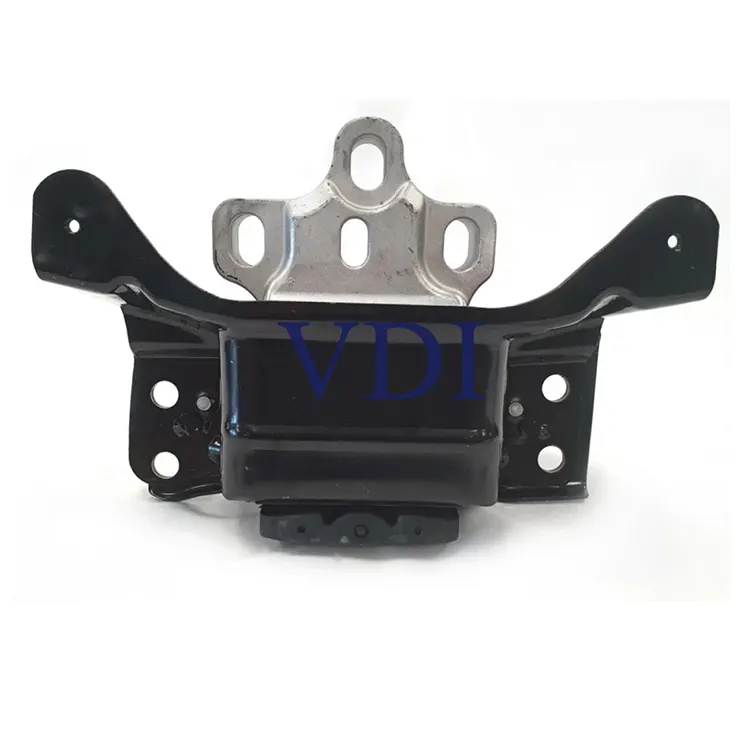
1. Understanding the Transmission Mount
A transmission mount is a structural component that helps connect the gearbox to the vehicle's body or subframe. Depending on the vehicle's design, it may consist of a metal bracket combined with a rubber or hydraulic damping element. The exact construction varies by application, so the original part specification should always be checked before ordering a replacement.
During normal operation, the engine and transmission generate movement and vibration. Acceleration, deceleration, road impacts, and gear changes create changing loads throughout the powertrain. Without suitable mounting components, these forces would be transmitted more directly into the chassis and passenger compartment.
Three important functions
- Powertrain support: Helps maintain the gearbox in its intended position relative to the engine, chassis, and drivetrain.
- Vibration isolation: Helps reduce the engine and transmission vibrations felt through the steering wheel, seats, floor, and dashboard.
- Movement control: Limits excessive powertrain movement when torque changes during acceleration, deceleration, and gear engagement.
The mount works together with the engine mounts and other drivetrain supports. A problem in one component can change the load distribution across the entire mounting system. This is why a complete inspection is often more useful than replacing a single part based on noise alone.
2. Why the Transmission Mount 5Q0199555AS Matters
The part number 5Q0199555AS identifies a specific mounting application associated with Volkswagen Group vehicles. Parts catalogs and aftermarket listings may also show related or superseding reference numbers. However, a similar number does not automatically mean that two components are interchangeable for every engine, gearbox, or production configuration.
When the correct mount is installed, the gearbox can remain properly supported while the mounting material manages normal vibration and movement. A mount with incorrect dimensions, stiffness, or bracket geometry may create installation difficulties or change the way vibration reaches the vehicle body.
Benefits of selecting the correct component
- Helps restore stable transmission support.
- Can reduce vibration and impact noises caused by a worn mount.
- Helps preserve the intended relationship between drivetrain components.
- Reduces the risk of repeat repairs caused by incorrect fitment.
- Supports a more predictable repair process for workshops and parts distributors.
It is important to distinguish a mount-related problem from a transmission fault. A worn mount can make gear engagement feel harsher, but it does not necessarily mean that the gearbox itself is damaged. Accurate diagnosis helps prevent unnecessary transmission repairs and keeps the maintenance budget under control.
3. Common Signs of Transmission Mount Failure
Mount deterioration can happen gradually as rubber ages, heat cycles accumulate, and repeated drivetrain loads affect the material. In some cases, a mount can also be damaged by impact, fluid contamination, or previous improper installation. Recognizing the warning signs early can help reduce further wear on surrounding components.
| Observed Symptom | Possible Explanation | Recommended Check |
|---|---|---|
| Vibration at idle | Worn mounting material or another engine-related vibration source | Inspect all engine and transmission mounts and check engine operation. |
| Clunking during gear changes | Excessive powertrain movement or loose mounting hardware | Check mount condition, fasteners, and related drivetrain components. |
| Noticeable movement during acceleration | Reduced mounting support or wear in multiple mounts | Arrange a professional powertrain inspection. |
| Cracked or separated rubber | Material aging, fatigue, contamination, or physical damage | Compare the mount against the manufacturer's replacement criteria. |
| Vibration remains after replacement | Incorrect fitment, alignment problems, other worn mounts, or an unrelated fault | Recheck installation and investigate other possible causes. |
When should you arrange an inspection?
Do not ignore a sudden increase in knocking, severe shaking, visible mount separation, or a noticeable change in drivetrain movement. These symptoms warrant prompt professional assessment. If the vehicle experiences severe movement, damaged components, or unsafe handling, stop driving and arrange appropriate recovery rather than continuing the journey.
Remember that vibration can also originate from engine misfires, exhaust contact, worn suspension bushings, damaged driveshaft components, or other mechanical issues. Symptoms are useful clues, but they are not proof that the transmission mount has failed.
4. How to Diagnose Mount Problems Before Replacing Parts
A systematic inspection can save time and money by identifying the actual source of the problem. Before purchasing the Transmission Mount 5Q0199555AS, record when the symptom occurs and whether it changes with engine speed, gear selection, road conditions, or vehicle load.
Step 1: Record the symptoms
Note whether vibration occurs at idle, when selecting a gear, during acceleration, or when lifting off the accelerator. Record any recent repairs, collisions, fluid leaks, or changes in driving behavior. This information helps a technician narrow down the possible causes.
Step 2: Inspect visible components
A qualified technician can examine accessible mounting points for cracks, separation, deformation, corrosion, damaged brackets, and signs of contact with adjacent components. If the mount uses a fluid-filled design, visible leakage may also be relevant. Not every mount uses the same construction, so inspection criteria should match the actual part.
Step 3: Check the complete mounting system
Inspect related engine mounts, torque supports, mounting brackets, and fasteners as appropriate. A failed neighboring mount can increase the load on the replacement component and contribute to recurring symptoms. The technician should also investigate other plausible vibration sources.
Step 4: Confirm the diagnosis
Use the vehicle manufacturer's service procedures to determine whether the mount has excessive movement or has failed its inspection criteria. Any movement test must be performed with the vehicle properly secured and the powertrain safely supported. Never place any part of the body beneath an unsupported vehicle or attempt to inspect moving drivetrain components by hand.
5. Vehicle Compatibility and Part Number Checks
Correct fitment is one of the most important considerations when purchasing a replacement mount. A product may be advertised under the reference 5Q0199555AS while another catalog identifies a related revision or an alternative number. Such listings can be useful research starting points, but they should not replace vehicle-specific verification.
Catalog information associates this reference with selected Volkswagen Group applications, including certain Volkswagen Golf, Škoda Octavia, and SEAT Leon configurations. Compatibility can vary by model year, engine, transmission, drivetrain, mounting position, and production specification. These model names should therefore be treated as preliminary guidance, not a guarantee of fitment.
What information should you verify?
| Information | Why It Matters |
|---|---|
| Vehicle identification number (VIN) | Helps identify the exact vehicle configuration and applicable parts catalog. |
| Original part number | Provides a starting point for checking the required component and official supersessions. |
| Model year and production date | Helps distinguish changes introduced during a model's production cycle. |
| Engine and transmission details | Different powertrain configurations may use different mounting arrangements. |
| Mounting position and bracket design | Helps prevent ordering a component designed for another location. |
One additional detail deserves attention: some parts catalogs identify 5Q0199555BK as a related reference or replacement number for 5Q0199555AS. This relationship must be confirmed against the specific vehicle and current manufacturer catalog before treating the numbers as interchangeable.
For more product information, you can review the ATH Transmission Mount 5Q0199555AS product page. If any catalog information conflicts with the number printed on the existing part, pause the order and request a compatibility check.
6. Replacement and Installation Considerations
Replacing a transmission mount involves more than removing an old component and installing a new one. The gearbox and associated powertrain components must remain properly supported throughout the procedure. Installation details also depend on the vehicle's design and the manufacturer's repair instructions.
Before installation
- Confirm the replacement number and mounting position.
- Compare the new component's bracket shape, mounting holes, and interfaces with the specified original part.
- Check for transport damage, deformation, or visible material defects.
- Review the manufacturer's instructions for mounting hardware and replacement requirements.
- Ensure that the correct lifting equipment, transmission support, and tools are available.
During installation
The technician should support the powertrain before removing load-bearing fasteners. The old mount should be removed according to the vehicle-specific procedure, and the mounting surfaces and surrounding hardware should be inspected before fitting the replacement.
The new component should align with the designated mounting points without being forced into position. Fasteners must be installed and tightened according to the manufacturer's specified sequence and torque values. Do not use generic torque figures or assume that existing bolts can always be reused.
After installation
- Verify that all required fasteners have been correctly installed.
- Confirm that adjacent hoses, wiring, brackets, and exhaust components are correctly positioned.
- Check for unusual contact, binding, or installation-related misalignment.
- Perform the prescribed post-repair checks and a controlled road test when safe.
- Reinvestigate any persistent vibration or knocking instead of assuming the new mount is defective.
A correctly installed mount should work with the rest of the drivetrain support system. If symptoms remain, the cause may be a second worn mount, incorrect part selection, installation tension, or a separate mechanical issue.
7. How to Choose a Reliable Replacement
Buyers comparing replacement mounts should consider fitment accuracy, construction quality, supplier reliability, documentation, and total repair cost. The lowest purchase price does not always deliver the best value if the component requires additional labor or creates repeat installation problems.
| Selection Factor | What to Look For | Customer Benefit |
|---|---|---|
| Fitment confirmation | Clear reference numbers and vehicle-specific compatibility support | Reduces the risk of ordering the wrong component. |
| Material and construction | Consistent rubber quality, sound metalwork, and secure bonding where applicable | Supports dependable operation under normal service loads. |
| Manufacturing consistency | Documented inspection procedures and appropriate quality controls | Helps reduce unwanted variation between parts. |
| Supplier communication | Responsive technical assistance and clear product documentation | Makes ordering and troubleshooting easier. |
| Warranty and after-sales support | Transparent terms and a clear process for addressing product concerns | Improves purchasing confidence and service planning. |
Why manufacturing quality matters
A transmission mount must balance structural support with vibration control. Its performance depends on the complete design, including the mounting geometry, material properties, bonding quality, and manufacturing consistency. Visual appearance alone cannot establish whether a component meets the requirements of a particular vehicle.
For repair shops and distributors, reliable traceability and clear part identification are also important. Accurate labels, organized packaging, and consistent product documentation help reduce warehouse errors and make future reorders more efficient.
ATH provides automotive replacement parts through its company website. When evaluating a specific mount, buyers should request the applicable fitment information, product specifications, and available quality documentation rather than relying on a generic product description alone.
8. Maintenance Tips for Longer Service Life
Transmission mounts are subject to repeated mechanical loads and environmental exposure. Although normal wear cannot be eliminated, sensible maintenance practices can help identify developing problems and avoid unnecessary stress on the mounting system.
Practical maintenance checklist
- Address vibration early. Investigate new or worsening symptoms before they contribute to additional wear.
- Inspect neighboring mounts. A weak engine mount or torque support may affect how loads are distributed.
- Investigate fluid contamination. Oil or other incompatible fluids can affect some mounting materials, depending on their composition.
- Use correct replacement hardware. Follow the vehicle manufacturer's instructions for bolts, fasteners, and tightening procedures.
- Avoid unnecessary drivetrain shock. Smooth acceleration and appropriate driving habits can reduce abrupt loading.
- Check after impact or major repairs. Inspect mounting points if the vehicle has experienced a significant impact or drivetrain removal.
- Keep repair records. Record the installed part number, date, mileage, and relevant inspection findings.
There is no universal replacement interval that applies to every transmission mount. Service life depends on the vehicle, operating environment, driving habits, material design, and maintenance history. Follow the vehicle manufacturer's guidance and replace the component when inspection findings justify it.
9. Frequently Asked Questions
Q1. What is the Transmission Mount 5Q0199555AS used for?
It is an automotive mounting component associated with selected Volkswagen Group applications. Its function is to support the relevant powertrain assembly, control movement, and help isolate vibration. The precise mounting position and vehicle application should be confirmed through a reliable parts catalog.
Q2. Which vehicles can use the 5Q0199555AS mount?
Parts listings associate this reference with selected Volkswagen Golf, Škoda Octavia, and SEAT Leon configurations, among other cataloged applications. Compatibility varies with the model, year, engine, transmission, and mounting position. Verify the VIN and original part number before purchasing.
Q3. Is 5Q0199555AS interchangeable with 5Q0199555BK?
Some parts catalogs identify these numbers as related references. However, interchangeability depends on the vehicle application and the manufacturer's supersession information. Confirm the exact replacement relationship for your vehicle instead of assuming that the suffix change guarantees compatibility.
Q4. What are the most common symptoms of a worn transmission mount?
Possible symptoms include increased cabin vibration, knocking during gear changes, excessive powertrain movement, and visible cracking or separation of the mounting material. These symptoms can have other causes, so a professional inspection is recommended before replacement.
Q5. Can I continue driving with a damaged transmission mount?
A severely damaged mount can allow excessive drivetrain movement and place additional stress on surrounding components. If the mount is visibly separated, the vehicle shakes severely, or drivetrain movement is pronounced, stop driving and arrange a professional assessment or recovery. Do not assume that a short journey is safe without evaluating the damage.
Q6. Should all engine and transmission mounts be replaced together?
Not necessarily. Replacement depends on the condition of each mount, the manufacturer's recommendations, and the findings of a full inspection. Replacing multiple worn mounts during one repair may reduce repeated labor, but serviceable components do not automatically need replacement.
Q7. Why does vibration continue after fitting a new mount?
Possible causes include another worn mount, incorrect part selection, installation misalignment, mounting hardware problems, or an unrelated engine, exhaust, suspension, or drivetrain fault. Recheck the installation and diagnose the entire system before replacing additional parts.
Q8. What should I check before ordering this replacement part?
Confirm the full part number, VIN, model year, engine, transmission, mounting position, and any officially documented supersession. Compare the supplier's fitment information with a vehicle-specific catalog and request clarification if any details conflict.
Q9. How can workshops and distributors reduce incorrect orders?
Keep vehicle identification and original part-number records, use verified cross-reference data, and confirm application details before processing an order. Clear product labels, documented inspection procedures, and reliable supplier communication also help reduce avoidable returns.
10. Conclusion: Make the Right Choice for Reliable Drivetrain Support
The Transmission Mount 5Q0199555AS is an important component to investigate when a compatible vehicle develops excessive vibration, clunking, or abnormal powertrain movement. Understanding its function and recognizing possible failure symptoms can help vehicle owners and workshops make more informed repair decisions.
The most effective approach combines accurate diagnosis, vehicle-specific fitment verification, dependable replacement quality, and correct installation. Checking related mounts and surrounding components is equally important because similar symptoms can originate from several different faults.
Before ordering, confirm the original part number and vehicle configuration. With appropriate checks and professional installation, a correctly specified replacement can help restore proper powertrain support and a more comfortable driving experience.
Looking for a Transmission Mount 5Q0199555AS Supplier?
Choosing the right automotive replacement part starts with accurate identification and dependable supplier support. ATH helps automotive parts buyers explore product information and replacement-part options for their requirements.
Whether you are a distributor, repair workshop, wholesaler, or automotive parts buyer, contact ATH to discuss the Transmission Mount 5Q0199555AS, verify relevant application details, and request further product information before placing an order.
Visit our ATH company page to learn more about the business, or view the product details for the next step in your purchasing process.
Contact Us for Product Information