How Is Car Audio Test Equipment Redefining Accuracy in Automotive Sound Measurement?
2025-12-17
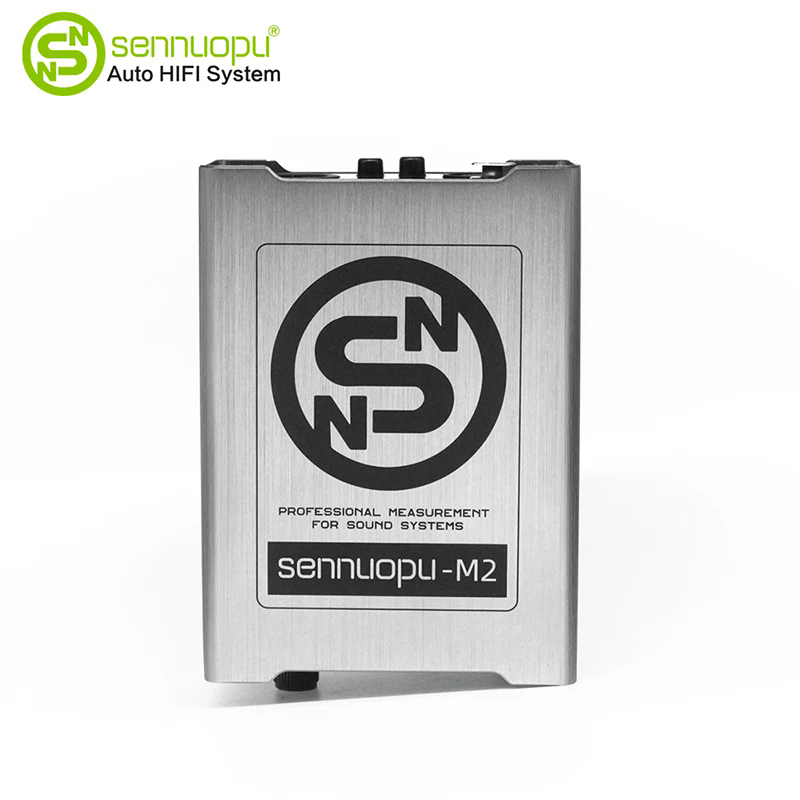
Car Audio Test Equipment refers to a specialized category of electronic instruments designed to evaluate, calibrate, and validate the performance of automotive sound systems. These systems are widely used by car audio manufacturers, OEM suppliers, professional installers, testing laboratories, and aftermarket audio brands to ensure sound accuracy, system stability, and compliance with technical standards.
How Does Car Audio Test Equipment Support Precise Audio System Evaluation?
Functional Role in Automotive Audio Testing
Car Audio Test Equipment plays a critical role in validating the performance of in-vehicle sound systems under real-world conditions. Unlike general-purpose audio analyzers, automotive-specific test equipment is engineered to accommodate voltage fluctuations, electromagnetic interference, temperature variations, and spatial constraints unique to vehicles.
Primary testing capabilities typically include signal generation, frequency response measurement, distortion analysis, noise evaluation, and channel balance verification. These functions allow engineers and technicians to identify performance deviations at both component and system levels.
Key Technical Parameters and Specifications
Professional-grade Car Audio Test Equipment is defined by a range of measurable parameters that directly influence testing accuracy and repeatability. The following table outlines representative technical specifications commonly required in automotive audio testing environments:
| Parameter | Typical Specification Range |
|---|---|
| Frequency Response | 10 Hz – 96 kHz |
| Signal-to-Noise Ratio (SNR) | ≥ 110 dB |
| Total Harmonic Distortion (THD+N) | ≤ 0.005% |
| Input Voltage Range | 0.1 V – 50 V |
| Channel Support | 2 to 16 channels |
| Sampling Rate | Up to 192 kHz |
| Interface Options | USB, Ethernet, CAN Bus |
| Operating Temperature | -20°C to +60°C |
These parameters ensure that testing results remain stable across various vehicle platforms, including passenger cars, commercial vehicles, and electric vehicles with high-voltage architectures.
Application Scenarios Across the Automotive Value Chain
Car Audio Test Equipment is deployed across multiple stages of the automotive audio lifecycle:
-
R&D and Product Development: Used to benchmark prototype systems and optimize DSP tuning.
-
Manufacturing Quality Control: Ensures batch-level consistency and detects assembly-related defects.
-
Aftermarket Installation: Assists professional installers in tuning amplifiers and speakers for optimal sound staging.
-
Compliance and Certification: Supports testing against regional and international audio performance standards.
Through these applications, Car Audio Test Equipment acts as a foundational tool for maintaining sound fidelity and system reliability.
How Is Car Audio Test Equipment Adapting to Evolving Vehicle Architectures?
Integration with Digital Signal Processing Systems
Modern vehicles increasingly rely on DSP-driven audio architectures. Car Audio Test Equipment must therefore interface seamlessly with digital domains, enabling real-time analysis of processed signals. Advanced equipment supports high-resolution sampling and synchronized multi-channel measurement, allowing accurate assessment of time alignment, crossover behavior, and phase response.
Compatibility with Electric and Smart Vehicles
The rise of electric vehicles has introduced new testing challenges, including higher electromagnetic noise levels and compact system layouts. Car Audio Test Equipment is now designed with enhanced shielding, differential input stages, and adaptive filtering algorithms to maintain measurement accuracy in these environments.
Additionally, smart vehicles equipped with voice assistants, active noise cancellation, and immersive audio formats require test equipment capable of evaluating both playback and interactive audio functions.
Data-Driven Testing and Automation
Automation has become a defining trend in automotive testing. Modern Car Audio Test Equipment often integrates software platforms that support automated test scripts, data logging, and statistical analysis. This enables large-scale testing with minimal manual intervention, improving efficiency and traceability.
How Can Car Audio Test Equipment Improve Testing Consistency and Decision-Making?
Repeatability and Standardization
One of the primary advantages of professional Car Audio Test Equipment is its ability to deliver repeatable results. By standardizing test signals, measurement procedures, and reporting formats, organizations can compare results across different production batches, vehicle models, and development cycles.
Diagnostic Precision
High-resolution measurement capabilities allow engineers to isolate specific issues such as channel imbalance, impedance mismatches, or non-linear distortion. This level of diagnostic precision reduces troubleshooting time and supports data-driven corrective actions.
Scalability for Different User Profiles
Car Audio Test Equipment is designed to scale across different user needs, from compact bench-top units for installers to fully integrated lab-grade systems for OEMs. Modular hardware configurations and customizable software interfaces ensure adaptability without compromising accuracy.
How Should Common Questions About Car Audio Test Equipment Be Addressed?
Q: How does Car Audio Test Equipment differ from standard audio analyzers?
A: Car Audio Test Equipment is specifically engineered for automotive environments, supporting higher voltage ranges, multi-channel configurations, and resistance to electromagnetic interference. Standard audio analyzers may lack the robustness and interface compatibility required for in-vehicle testing.
Q: How often should car audio systems be tested using professional equipment?
A: Testing frequency depends on the application. During development and manufacturing, testing is typically conducted at every critical stage. For aftermarket installations, testing is recommended after installation and during major system upgrades to ensure consistent performance.
How Will Car Audio Test Equipment Continue to Evolve with Market Demand?
Alignment with Industry Standards
As automotive audio standards evolve, test equipment must support new measurement protocols and compliance requirements. This includes compatibility with immersive audio formats, higher channel counts, and expanded frequency ranges.
Emphasis on Software Intelligence
Future Car Audio Test Equipment is expected to place greater emphasis on software intelligence, including AI-assisted signal analysis, predictive diagnostics, and cloud-based data management. These capabilities will enable faster decision-making and improved collaboration across global teams.
Support for Sustainable Manufacturing
Sustainability considerations are also influencing test equipment design. Energy-efficient hardware, longer calibration cycles, and remote diagnostic capabilities help reduce operational costs and environmental impact.
Conclusion and Brand Reference
Car Audio Test Equipment has become an indispensable component in the automotive audio ecosystem, supporting accurate measurement, system optimization, and quality assurance across increasingly sophisticated vehicle platforms. By addressing both electrical and acoustic performance parameters, this equipment enables manufacturers and service providers to meet rising consumer expectations for sound quality and reliability.
As a specialized brand in this field, Sennuopu focuses on delivering Car Audio Test Equipment solutions that align with professional testing requirements and evolving automotive technologies. For organizations seeking detailed specifications, application guidance, or customized testing solutions, contact us to explore how Sennuopu can support advanced automotive audio testing objectives.