

How to Choose the Right OTR Tires for Heavy-Duty Construction Vehicles
2025-12-08
Selecting the correct OTR TIRES for your heavy-duty construction vehicles is a critical decision that impacts safety, productivity, and total cost of ownership. With demanding applications in mining, quarrying, and major earthworks, the wrong tire can lead to premature failure, costly downtime, and increased operational risk. This guide will help you navigate the key factors in the selection process and highlight how JABIL's engineered solutions are built to meet these extreme challenges.
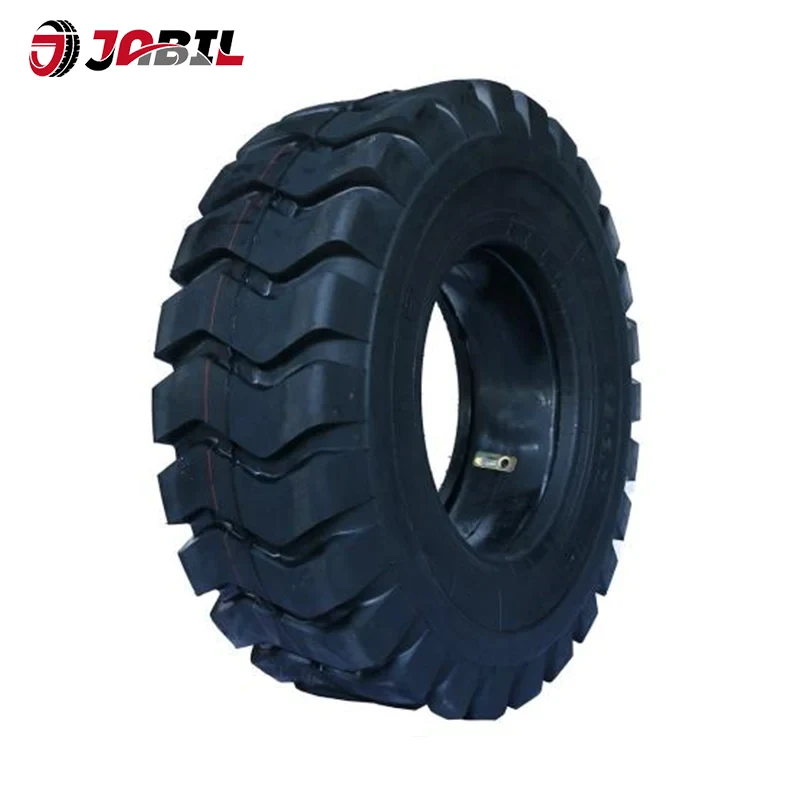
The choice hinges on three core pillars: Application Analysis, Construction & Compound, and Size & Specifications.
1. Application Analysis: Match the Tire to the Job
First, conduct a thorough site and vehicle analysis.
-
Vehicle Type: Is it a rigid haul truck, wheel loader, grader, or excavator?
-
Primary Work Cycle: Hauling distance, load-and-carry, or stationary loading?
-
Operating Conditions: Surface (rock, mud, coarse gravel), slopes, and average ambient temperature.
2. Tire Construction & Compound: The Foundation of Performance
OTR TIRES come in two main constructions, each with distinct advantages:
| Feature | Radial Tires | Bias-Ply Tires |
|---|---|---|
| Construction | Steel cord belts under the tread, radial body ply. | Nylon or polyester cord plies crisscrossed at angles. |
| Key Benefits | Longer tread life, better fuel efficiency, superior cut resistance, more stable footprint. | Stronger sidewall, often lower initial cost, good shock absorption. |
| Ideal For | Long-haul cycles, abrasive surfaces, fuel-conscious operations. | Shorter cycles, severe rock cuts where sidewall damage is a high risk. |
JABIL's advanced rubber compounds are tailored for specific hazards. Our X-Traction compound prioritizes cut and chip resistance for rocky terrains, while our M-Durance compound focuses on heat dissipation and longevity for high-speed haul roads.
3. Size, Load & Speed Ratings: The Non-Negotiables
Always adhere to the vehicle manufacturer’s specified tire size. Then, verify the tire’s Load Index (LI) and Speed Symbol (SS) against your vehicle's maximum loaded weight and operational speed. An under-rated tire is a severe safety hazard. JABIL provides detailed technical datasheets for every tire, ensuring full compliance and performance transparency.
OTR TIRES FAQ
Q: How often should I check the inflation pressure on my OTR tires?
A: Inflation pressure must be checked and corrected daily with a calibrated gauge when the tires are cold. Even slight under-inflation is the leading cause of heat buildup, premature wear, and casing failure, dramatically shortening tire life.
Q: Can I retread my JABIL OTR tire casing?
A: Yes, most JABIL OTR TIRES are designed with multiple life cycles in mind. Our high-integrity casings are built for durability and are excellent candidates for professional retreading. A proper casing inspection by a certified technician is required to determine suitability.
Q: What is the best practice for matching tires on a multi-wheel vehicle?
A: For dual-wheel positions (like on haul truck rear axles), tires must be matched within ¼-inch of rolling circumference and have similar tread depths. Mismatched tires cause uneven load distribution, rapid wear, and can lead to differential damage. JABIL offers precise pairing services to ensure optimal performance.
Choosing the right OTR TIRES is an investment in your operation's efficiency and safety. It requires careful consideration of your specific working environment and performance demands. JABIL's comprehensive range of radial and bias-ply tires, backed by expert technical data and engineered for the most severe conditions, provides the reliable solution you need to keep your heavy-duty fleet moving.
Contact us today for a personalized tire recommendation and let our experts help you optimize your fleet's performance and profitability.