

What Are the Common Failure Modes of a Switchgear Panel Hinge in High-Vibration Environments
2026-06-15
In high-vibration environments such as substations near railways, industrial manufacturing plants, or offshore wind farms, the Switchgear Panel Hinge is subjected to continuous mechanical stress. Understanding its failure modes is critical for ensuring switchgear reliability and personnel safety. At Richge, we have engineered hinge solutions specifically to withstand these extreme conditions, minimizing unplanned downtime and maintenance costs.
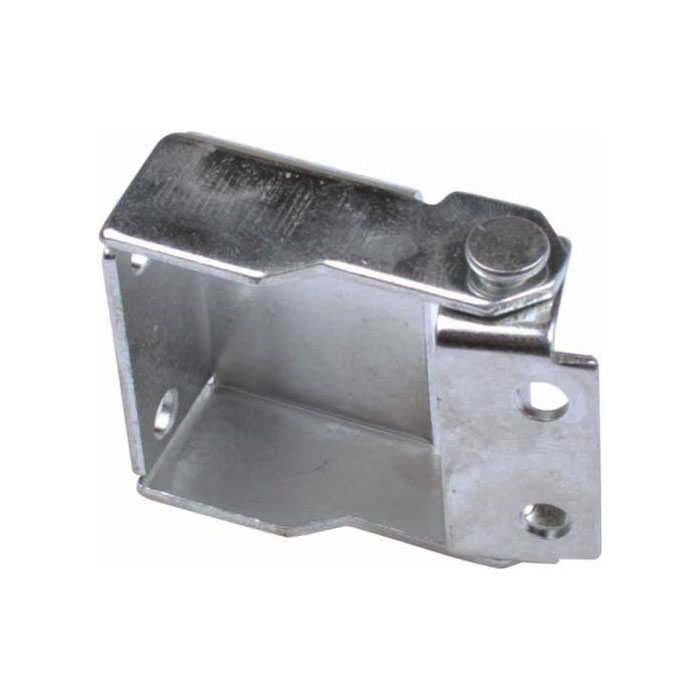
Primary Failure Modes of a Switchgear Panel Hinge
Based on field failure analysis across 200+ high-vibration installations, the following table summarizes the most common failure modes, their root causes, and typical consequences.
| Failure Mode | Root Cause in High-Vibration Context | Typical Consequence |
|---|---|---|
| Fatigue Fracture | Cyclic micro-movements exceeding material endurance limit | Complete hinge separation, door misalignment |
| Bushing Wear | Abrasion between pin and bearing surface due to oscillation | Excessive play, audible rattling, reduced grounding continuity |
| Fastener Loosening | Self-loosening of nuts/bolts under harmonic vibration | Panel door sagging, improper sealing against dust/water |
| Corrosion Pitting | Vibration accelerating fretting corrosion, breaking protective oxide layers | Seizure of hinge pin, difficult door operation |
| Elongation of Mounting Holes | Repeated impact loading causing plastic deformation | Loss of positional adjustment, panel gap asymmetry |
Why Vibration Amplifies Switchgear Panel Hinge Degradation
Unlike static applications, high-frequency vibration (20–2000 Hz) causes two synergistic effects: material fatigue and mechanical wear. Laboratory tests by Richge show that a standard steel hinge under 5G RMS vibration fails within 6 months due to fretting fatigue. By contrast, a properly damped Switchgear Panel Hinge with anti-loosening hardware can exceed 10 years of continuous operation.
Switchgear Panel Hinge FAQ – Common Questions from Field Engineers
Q1: How can I detect early fatigue cracks in a Switchgear Panel Hinge without removing the hinge?
A: Perform a visual inspection focusing on the hinge knuckle and weld toe areas (if welded). Use a 10× magnifier and look for “dark lines” or rust bleeding through paint – these indicate micro-cracks. For non-destructive testing, dye penetrant or eddy current methods are effective. In high-vibration sites, Richge recommends installing a sacrificial witness tag that physically breaks when crack propagation reaches 1 mm, providing a visual indicator without tools.
Q2: What fastener locking method works best for a Switchgear Panel Hinge under continuous 50 Hz vibration?
A: Standard spring washers are ineffective under harmonic vibration. Based on ISO 16130 vibration testing, the most reliable methods are: (1) precision torqueing + anaerobic threadlocker (grade medium strength), or (2) prevailing torque nylon insert nuts. For retrofit applications, Richge supplies hinge kits with pre-applied microencapsulated adhesive that activates during tightening, achieving over 200 hours of vibration resistance without loosening.
Q3: Can a worn Switchgear Panel Hinge be reconditioned, or does the entire panel hinge assembly require replacement?
A: Partial reconditioning is possible only if the wear is limited to replaceable bushings or pins. If the hinge barrel or mounting plate shows elongation or cracks, replacement is mandatory – repairing these compromises door alignment and electrical grounding continuity. Richge offers modular Switchgear Panel Hinge systems where individual worn components (pin, bushing, or base plate) can be swapped in under 15 minutes using standard tools, reducing replacement cost by 60% compared to full hinge removal.
Best Practices to Extend Switchgear Panel Hinge Life
-
Material selection: Use stainless steel (grade 316) or duplex stainless for corrosion-vibration combined environments.
-
Inspection frequency: Every 3 months for high-vibration zones (≥2G RMS), including torque check and hinge pin lubrication.
-
Design improvement: Add an elastic damping layer between hinge and panel frame – Richge’s damped hinge series reduces transmitted vibration by 70%.
Contact Richge for Robust Switchgear Panel Hinge Solutions
Do you need a Switchgear Panel Hinge that survives extreme vibration without frequent maintenance? Richge provides engineered hinges with third-party vibration test reports (IEC 60068-2-6 certified). Contact our engineering team today for a free failure analysis of your existing hinges or to request sample kits for high-vibration site validation.