

Airport trailer solid tires are designed for ground support equipment that requires dependable load support and reduced exposure to punctures. Compared with pneumatic tires, solid tires eliminate the need for inflation and help reduce flat-tire interruptions. However, selecting the right product requires more than checking its dimensions. Load capacity, rubber compound, tread pattern, wheel compatibility, operating speed, surface conditions, and heat management all influence service life and performance. Understanding these factors helps airport operators improve equipment availability, manage maintenance costs, and make more informed purchasing decisions.
1. What Are Airport Trailer Solid Tires?
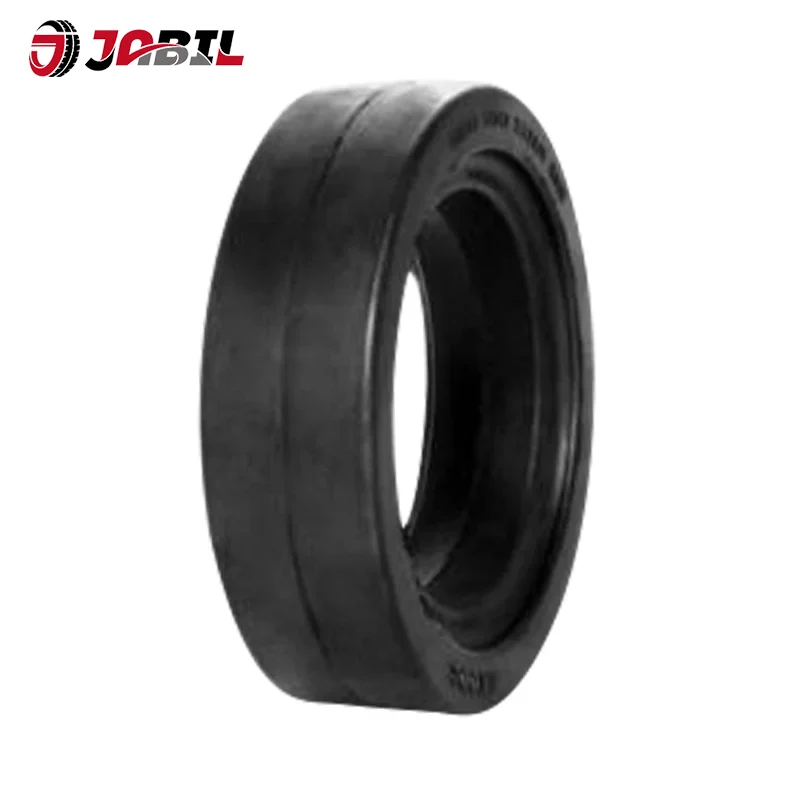
Airport trailer solid tires are non-pneumatic tires manufactured with solid rubber or specialized elastomer structures rather than an air-filled cavity. They are commonly used on baggage trailers, luggage carts, cargo dollies, and other ground support equipment (GSE) that transports materials around airport facilities.
Unlike conventional pneumatic tires, solid tires do not depend on internal air pressure to support the vehicle. This eliminates punctures caused by sharp objects and removes routine inflation requirements. These characteristics are particularly useful in environments where equipment availability is essential to keeping baggage and cargo moving.
Solid tires are available in different dimensions, tread designs, rubber compounds, and load ratings. The appropriate configuration depends on the trailer's construction, wheel specifications, payload, travel speed, and operating environment.
2. Why Do Airport Trailers Need Specialized Tires?
Airport ground support equipment operates under a different set of conditions from many ordinary industrial vehicles. Its tires must handle repetitive movement, changing payloads, frequent maneuvering, and the practical demands of busy ground operations.
Repeated Loading and Unloading
Baggage and cargo trailers may be loaded, unloaded, parked, and moved several times throughout a shift. The resulting changes in wheel loading create repeated stresses on the tire structure. A suitable tire must support the actual operating load without excessive deformation or heat buildup.
Frequent Turning and Braking
Trailers often navigate narrow service lanes, terminal approaches, and aircraft parking areas. Turning forces and repeated braking can accelerate uneven wear, especially when wheels are misaligned or the load is poorly distributed. Tire selection should therefore account for maneuverability as well as straight-line load capacity.
Surface Debris and Environmental Exposure
Airport aprons and service routes may contain small debris, surface joints, water, dust, and other sources of tire stress. Solid construction reduces puncture-related interruptions, but it does not remove the need for suitable traction, regular inspections, and attention to surface conditions.
Pressure to Minimize Downtime
A trailer taken out of service can interrupt the movement of baggage or cargo and create additional work for ground crews. Reducing avoidable tire failures helps fleet managers maintain predictable equipment availability and plan maintenance more effectively.
3. Key Benefits of Solid Tires for Airport Operations
Reduced Risk of Flat Tires
Because solid tires do not rely on compressed air, they cannot suffer conventional puncture-related air loss. This is a major advantage for trailers operating around debris or in environments where a flat tire could disrupt scheduled handling activities.
Lower Routine Maintenance Requirements
Operators do not need to check and replenish tire pressure as part of routine solid-tire maintenance. This can simplify fleet inspections and reduce the labor associated with pressure management. Nevertheless, visual inspections, wheel checks, and wear monitoring remain necessary.
Dependable Load Support
When correctly specified, solid tires provide consistent structural support without pressure fluctuations. This helps operators manage repetitive transport tasks and changing loads within the tire's approved operating limits.
Potentially Lower Lifetime Operating Costs
The purchase price is only one component of the total cost of ownership. A more complete assessment considers replacement frequency, inspection labor, equipment downtime, installation, and the consequences of operational interruptions.
- Fewer puncture-related service interruptions.
- No routine inflation or pressure-loss troubleshooting.
- More predictable inspection and replacement planning.
- Potential reductions in maintenance labor and downtime costs.
Actual savings depend on the tire design, application, workload, surface conditions, and replacement interval. Solid tires should therefore be evaluated using operating data rather than purchase price alone.
4. Solid Tires vs. Pneumatic Tires
Both solid and pneumatic tires can serve industrial transport applications, but their strengths differ. Understanding these differences helps buyers select tires that match their equipment and operating priorities.
| Evaluation Factor | Solid Tires | Pneumatic Tires |
|---|---|---|
| Puncture risk | No conventional air-loss punctures | Can lose pressure after punctures |
| Inflation requirements | No inflation required | Pressure must be monitored |
| Shock absorption | Generally firmer, depending on design | Often better with appropriate pressure and construction |
| Operating interruptions | Lower exposure to flat-tire interruptions | More vulnerable to puncture-related downtime |
| Heat considerations | Requires attention to load, speed, and heat buildup | Also requires appropriate pressure and operating conditions |
| Typical selection priority | Durability and reduced pressure-related maintenance | Ride comfort and shock absorption where needed |
For many baggage trailers and low-speed ground support carts, solid tires offer a practical solution when puncture resistance and predictable maintenance are priorities. Pneumatic tires may be more appropriate where cushioning is particularly important or where the equipment manufacturer specifies them.
The final decision should account for axle design, suspension, surface quality, operating speed, and manufacturer recommendations. Solid tires should not automatically be treated as a direct replacement for pneumatic tires without checking compatibility.
5. How to Choose the Right Airport Trailer Solid Tires
Choosing the correct tire requires matching product specifications to real operating conditions. A tire that fits the wheel physically may still be unsuitable for the trailer's load, speed, or duty cycle.
Step 1: Confirm the Tire Size
Check the existing tire markings, equipment manual, and wheel dimensions. Confirm the required tire diameter, section width, rim size, and any relevant mounting specifications. Do not rely on visual similarity alone, as small dimensional differences can affect clearance and handling.
Step 2: Calculate the Actual Wheel Load
Determine the fully loaded trailer weight, including the trailer itself, cargo, and any additional equipment. The load is not always distributed equally across all wheels, particularly during turning, uneven loading, or movement over irregular surfaces.
As an initial estimate, divide the maximum operating weight by the number of load-bearing wheels. Then account for uneven load distribution and dynamic operating forces with the equipment manufacturer's guidance. The selected tire's rated capacity must meet the applicable wheel load at the intended speed and operating conditions.
Step 3: Check Operating Speed and Duty Cycle
A tire's permissible load may depend on operating speed and service conditions. Repeated starts, tight turns, long operating shifts, and extended periods under load can influence heat buildup and wear. Confirm that the tire is suitable for the equipment's actual speed and usage pattern.
Step 4: Evaluate Surface and Traction Requirements
Identify whether the trailer primarily operates on smooth concrete, asphalt, textured pavement, or routes with frequent surface transitions. Consider wet conditions and the need for predictable steering and braking. Select a tread design and rubber compound appropriate for these conditions.
Step 5: Verify Wheel and Mounting Compatibility
Confirm that the tire construction is compatible with the wheel or rim assembly. Some solid tires require specific mounting equipment or installation procedures. Incorrect fitting can damage the tire, wheel, or assembly and create operational hazards.
Step 6: Compare Service Life and Total Cost
Ask suppliers about wear characteristics, recommended operating limits, available specifications, quality control, and replacement planning. Comparing the expected cost over the service life is more useful than comparing unit prices alone.
6. Tread Patterns and Rubber Compound Selection
Tread design and rubber formulation affect traction, wear, rolling behavior, and the tire's suitability for different operating environments. Availability and performance vary by manufacturer, so buyers should confirm the characteristics of the specific product being offered.
Common Tread Pattern Considerations
- Rib patterns: Often considered for relatively smooth surfaces and applications where directional stability is important.
- Lug patterns: May be suitable where additional tread engagement is required, depending on the surface and tire design.
- Smooth or low-marking designs: May be considered for particular floor-protection or indoor operating requirements when the manufacturer offers a suitable compound.
These are general selection considerations rather than universal performance guarantees. A particular tread pattern should be evaluated against the actual surface, load, speed, and steering requirements.
Why Rubber Compound Matters
The rubber compound influences resistance to abrasion, cracking, chunking, and other forms of deterioration. A compound optimized for one environment may not be the best choice for another. For example, high-abrasion routes and environments with demanding temperature conditions may require different performance priorities.
When requesting a quotation, provide the supplier with the intended application, operating temperature range, average working hours, surface conditions, and any special requirements. This allows the supplier to recommend an appropriate product instead of relying on tire dimensions alone.
7. Inspection and Maintenance for Longer Service Life
Solid tires reduce the maintenance associated with air pressure, but they are not maintenance-free in every respect. A structured inspection routine helps identify wear, mounting problems, and damage before they become more serious.
Daily or Pre-Shift Checks
- Inspect the tread and sidewalls for cracks, cuts, chunks, or unusual deformation.
- Look for uneven wear that may indicate alignment, load distribution, or operating problems.
- Check the wheel assembly, fasteners, and visible mounting components for damage or looseness.
- Confirm that the trailer rolls, steers, and stops as expected.
- Remove the equipment from service if a condition presents a potential safety risk.
Periodic Fleet Inspections
Fleet managers should record tire condition, installation dates, operating hours where available, and replacement reasons. These records help identify recurring issues across particular routes, trailer models, or tire batches.
When one tire wears significantly faster than comparable tires, investigate the cause instead of immediately assuming that the tire itself is defective. Uneven payloads, incorrect alignment, worn bearings, damaged wheels, and unsuitable operating conditions may all contribute.
Prevent Overloading and Excessive Heat
Excessive loads and unsuitable speeds can generate additional stress and heat, potentially shortening tire life. Follow the tire and equipment manufacturers' operating limits. Avoid using an increased load rating as a substitute for checking axle capacity, wheel compatibility, or the trailer's overall rated capacity.
8. Purchasing Checklist for Fleet Managers
For airport operators, maintenance teams, distributors, and equipment manufacturers, a clear purchasing specification helps reduce ordering errors and improve supplier communication.
| Information to Prepare | Why It Matters |
|---|---|
| Existing tire size and wheel specifications | Confirms dimensional and mounting compatibility. |
| Maximum loaded trailer weight | Supports correct load-capacity evaluation. |
| Number of load-bearing wheels and axle layout | Helps determine actual wheel loads and load distribution. |
| Operating speed and working hours | Helps assess suitability for the duty cycle and heat conditions. |
| Surface conditions and environment | Guides tread and compound selection. |
| Required quantity and purchasing schedule | Supports production planning and replenishment. |
| Quality documentation and product requirements | Helps evaluate consistency, traceability, and suitability for the intended application. |
Before confirming an order, request the relevant product datasheet and verify the rated load, permissible speed, dimensions, mounting requirements, and applicable usage limitations. For replacement projects, sharing photographs of the existing tire markings and wheel assembly can also help the supplier identify the correct specification.
9. Why Consider JABIL Rubber Co., Ltd.?
For businesses sourcing industrial rubber tires, choosing a supplier involves more than finding a product with the correct nominal size. Application suitability, specification accuracy, consistent manufacturing quality, and responsive technical communication all contribute to a successful purchasing decision.
JABIL Rubber Co., Ltd. is a name purchasing teams can include in their supplier evaluation when exploring rubber tire solutions for industrial transport applications. For airport trailer solid tires, buyers should confirm the availability of the required dimensions, load ratings, tread configurations, and rubber compounds directly with the company.
What Buyers Should Confirm with a Supplier
- Product suitability: Whether the available tire specifications match the intended airport trailer or baggage cart application.
- Technical information: Whether dimensional drawings, load ratings, operating limitations, and installation guidance are available.
- Quality consistency: What inspection procedures and product traceability arrangements apply to the requested tires.
- Order planning: Whether the supplier can support the required order quantity, lead time, and replenishment schedule.
- Special requirements: Whether alternative specifications or customized solutions can be evaluated for the intended equipment.
Providing accurate operating information at the quotation stage helps both parties determine whether a proposed tire is appropriate. It also reduces the risk of purchasing a product that fits the wheel but does not meet the equipment's load or operating requirements.
10. Frequently Asked Questions
Q1: What are airport trailer solid tires used for?
They are used on airport baggage trailers, luggage carts, cargo dollies, and other compatible ground support equipment. Their non-pneumatic construction eliminates conventional puncture-related air loss and reduces the need for inflation maintenance.
Q2: Are solid tires better than pneumatic tires for baggage trailers?
Solid tires can be a good choice when puncture resistance and reduced pressure-related maintenance are priorities. Pneumatic tires may offer better shock absorption in some applications. The appropriate option depends on equipment design, surface conditions, load, speed, and manufacturer recommendations.
Q3: How do I determine the correct load capacity?
Start with the trailer's maximum loaded weight and the number and arrangement of its load-bearing wheels. Account for uneven load distribution and operating conditions, then verify the required capacity against the tire manufacturer's ratings and equipment specifications. An average load-per-wheel calculation alone is not sufficient for final selection.
Q4: Do solid tires require maintenance?
Yes. Although they do not require inflation, they still need inspections for wear, cracking, cuts, deformation, mounting issues, and wheel damage. Regular checks help identify problems and support safe, predictable operation.
Q5: Why do airport trailer solid tires wear unevenly?
Common contributing factors include uneven loading, wheel misalignment, worn bearings, incorrect tire specifications, excessive speed, tight turning, and differences in route conditions. Inspect the complete wheel assembly and operating setup to identify the underlying cause.
Q6: Can solid tires be installed on any airport trailer?
No. The tire must match the wheel or rim, mounting arrangement, available clearance, load requirements, and operating conditions. Confirm compatibility with the equipment and tire manufacturers before replacing an existing tire type.
Q7: What information should I provide when requesting a quotation?
Provide the tire size, wheel specifications, maximum loaded weight, wheel arrangement, operating speed, surface conditions, required quantity, and any special environmental or performance requirements. Photographs of the existing tire markings can also help with identification.
Q8: How can I reduce the total cost of airport trailer tires?
Choose a tire that matches the application, prevent overloading, inspect wheel assemblies regularly, monitor wear, and investigate recurring failures. Compare the expected service life, maintenance labor, replacement costs, and downtime rather than evaluating the initial purchase price alone.
Conclusion: Choose Airport Trailer Solid Tires for Your Operating Conditions
Reliable airport trailer solid tires contribute to efficient baggage handling and dependable ground support operations. Their resistance to conventional punctures and lack of inflation requirements can help reduce avoidable interruptions, but long-term performance still depends on correct sizing, load capacity, rubber compound, tread design, installation, and maintenance.
For purchasing teams, the most effective approach is to define operating requirements clearly, compare verified technical specifications, and work with a supplier that can explain the suitability and limitations of the proposed product. These steps help reduce compatibility risks, improve maintenance planning, and support better long-term value.
Looking for Airport Trailer Solid Tires?
Choosing the right solid tires starts with understanding your equipment, operating conditions, and performance requirements. Contact JABIL Rubber Co., Ltd. to discuss your application, share your tire specifications, and inquire about suitable product options for your purchasing needs.