

What Makes Web Type Skid Steer Solid Tires a Smarter Choice for Heavy-Duty Work?
2026-10-13
When a skid steer loader operates in demolition zones, recycling yards, construction sites, or industrial facilities, tire performance directly affects productivity, maintenance costs, and operating safety. Sharp debris, abrasive surfaces, and frequent turning can quickly damage conventional pneumatic tires, leading to unexpected downtime. Web Type Skid Steer Solid Tires offer a practical alternative by combining puncture-resistant rubber construction with a flexible web structure designed to improve cushioning and support demanding work cycles.
For equipment distributors, fleet managers, and industrial buyers, choosing the right tire is not simply about the purchase price. It is about finding a reliable balance between durability, traction, comfort, and long-term operating value. With suitable tire specifications and application matching, businesses can improve equipment availability and reduce unnecessary maintenance interruptions.
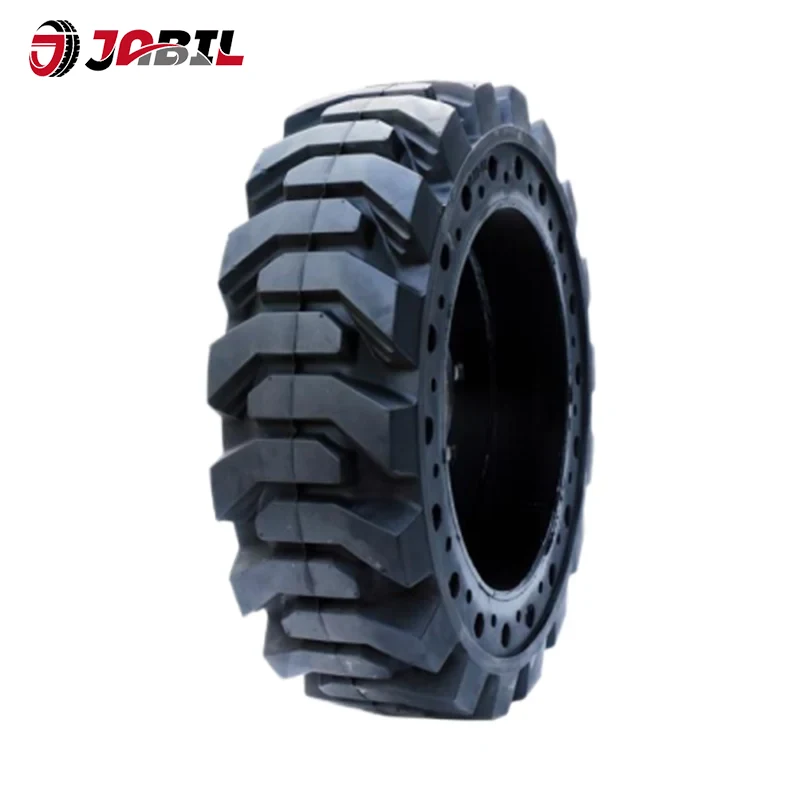
What Are Web Type Skid Steer Solid Tires?
Web Type Skid Steer Solid Tires are airless tires made from engineered rubber, featuring openings or a web-like structure within the tire body. Unlike pneumatic tires, they do not depend on internal air pressure, helping eliminate flat tires caused by punctures.
The web structure also allows controlled deformation under load. This can improve shock absorption compared with some conventional solid tire designs, although actual performance depends on the tire's construction, rubber compound, and operating conditions.
Key features include:
-
Puncture resistance: Solid rubber construction eliminates air-loss failures caused by punctures.
-
Flexible web structure: Designed to provide cushioning and help reduce vibration during operation.
-
Durable tread design: Helps maintain traction and resist wear on suitable working surfaces.
-
Reduced routine maintenance: No tire inflation or air-pressure monitoring is required.
-
Operational reliability: Helps reduce tire-related interruptions in environments with sharp debris.
These characteristics make web-type solid tires worth considering for machines that work under demanding industrial conditions.
Why Are Web Type Skid Steer Solid Tires Important?
Tires are the only parts of a skid steer loader that maintain direct contact with the ground. Their performance affects how effectively the machine pushes materials, carries loads, turns, and moves across a jobsite.
1. Reduce Puncture-Related Downtime
Demolition waste, scrap metal, broken concrete, and sharp stones can damage pneumatic tires. Even one flat tire may interrupt a shift, delay material handling, and require emergency repairs.
Web Type Skid Steer Solid Tires eliminate the risk of conventional puncture-related deflation. This makes them particularly valuable for businesses where uninterrupted machine operation is a priority.
2. Improve Long-Term Operating Value
Although solid tires may require a higher initial investment than some pneumatic options, they can reduce spending on puncture repairs, replacement tires, and tire-related service calls.
Their value should be evaluated over the entire service life rather than by purchase price alone. Actual savings depend on the application, tire quality, maintenance practices, and operating intensity.
3. Support Traction and Machine Control
A suitable tread pattern helps transfer machine power to the ground. When selected for the correct surface, it can support effective pushing, turning, and material handling.
Because skid steer loaders frequently turn by creating different wheel speeds on each side, tires must also withstand substantial lateral forces. Durable tread and sidewall construction are therefore important selection factors.
4. Help Improve Operator Comfort
Solid tires generally provide less cushioning than air-filled tires. A web-type design introduces structural flexibility that can help absorb some impacts and vibration.
The result depends on the tire design and terrain. Operators should consider surface conditions, working speed, and shift duration when balancing puncture resistance against ride comfort.
Where Can Web Type Skid Steer Solid Tires Be Used?
Different industries place different demands on skid steer tires. Web-type solid tires are most useful where puncture resistance and dependable operation are priorities.
| Application | Main Tire Requirement | Potential Benefit |
|---|---|---|
| Demolition sites | Resistance to sharp debris | Fewer puncture-related interruptions |
| Recycling facilities | Durability on abrasive surfaces | More consistent equipment availability |
| Scrap yards | Resistance to cuts and punctures | Reduced emergency tire maintenance |
| Construction sites | Traction and load support | Reliable material-handling performance |
| Industrial yards | Wear resistance on hard surfaces | Lower routine maintenance requirements |
| Waste handling | Durability under demanding cycles | Improved operational continuity |
The best results come from matching tread design, load rating, tire dimensions, and machine compatibility to the actual working environment.
Which Tire Type Is Better for Your Skid Steer Loader?
Web-type solid tires are not automatically the best choice for every machine. Comparing common tire options helps buyers make a more informed decision.
| Comparison Factor | Web Type Solid Tires | Pneumatic Tires | Conventional Solid Tires |
|---|---|---|---|
| Puncture resistance | Excellent | Limited | Excellent |
| Ride cushioning | Design-dependent | Generally excellent | Often firmer |
| Inflation maintenance | Not required | Required | Not required |
| Performance on soft ground | Application-dependent | Often preferable | Application-dependent |
| Initial investment | Varies by specification | Often lower | Varies by design |
| Main advantage | Durability with structural flexibility | Comfort and versatility | Durable airless construction |
For demolition, recycling, and other puncture-prone applications, web-type solid tires can offer a useful combination of durability and cushioning. For landscaping or soft ground, pneumatic tires may be more suitable because of their ride comfort and terrain adaptability.
Before purchasing, confirm the machine manufacturer's approved tire specifications and operating requirements.
How Should Buyers Select the Right Web Type Skid Steer Solid Tires?
Selecting tires based only on appearance or price can result in unnecessary wear and poor machine performance. Buyers should evaluate several technical factors.
1. Confirm Tire Size and Compatibility
Check the existing tire markings, machine model, wheel configuration, and manufacturer's recommendations. Tire dimensions and mounting requirements must match the equipment.
2. Evaluate Load Capacity and Operating Speed
Choose tires with load ratings appropriate for the machine, attachments, carried materials, and expected operating speed. Never assume that every solid tire of the same nominal size has the same load capacity.
3. Match the Tread to the Surface
Consider whether the machine mainly operates on concrete, gravel, compacted soil, or debris-covered ground. Tread design influences traction, wear, and maneuverability.
4. Consider Heat and Duty Cycle
Continuous operation, heavy loads, and frequent turning can increase tire temperature. Ask the supplier for relevant operating limits and recommendations for intensive work cycles.
5. Compare Total Cost of Ownership
Assess the purchase price alongside expected service life, replacement frequency, maintenance expenses, installation requirements, and the cost of downtime.
A tire that costs more initially may deliver better value if it performs reliably in the intended application.
Why Consider JABIL Rubber Co., Ltd.?
For buyers sourcing industrial solid tires, choosing a supplier that understands application requirements is an important part of the procurement process.
JABIL Rubber Co., Ltd. provides a starting point for businesses evaluating solid skid steer tire solutions. When comparing available products, buyers should request detailed information about rubber compounds, web structure, tread options, dimensions, load ratings, and compatibility with their equipment.
A professional purchasing evaluation should also cover:
-
Product specifications and dimensional tolerances.
-
Intended applications and recommended operating conditions.
-
Wear resistance and puncture-related performance.
-
Available sizes, tread patterns, and customization options.
-
Quality-control procedures and export packaging requirements.
Clear technical communication helps distributors, equipment dealers, and fleet operators identify a tire solution that fits their operational needs.
Conclusion
Web Type Skid Steer Solid Tires can help businesses reduce puncture-related downtime, simplify tire maintenance, and maintain dependable performance in demanding environments. Their web-style construction offers a potential cushioning advantage over some conventional solid tires while retaining the key benefit of airless operation.
The right choice still depends on machine compatibility, working surfaces, load requirements, and operating intensity. By evaluating these factors alongside total cost of ownership, buyers can make more confident procurement decisions.
Looking for reliable solid tire solutions for your skid steer loaders? Contact JABIL Rubber Co., Ltd. to discuss your application requirements, confirm suitable tire specifications, and explore available options for your industrial equipment needs.