
Which Metrics Matter Most When Using Acoustic Analysis Equipment for Automotive Speaker Tuning
2026-05-26
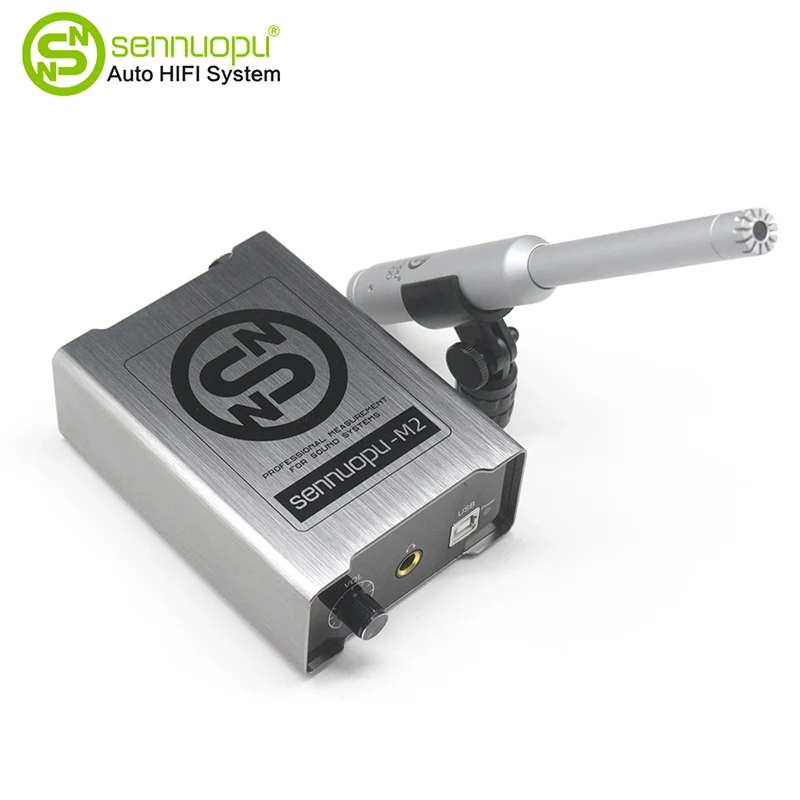
Achieving pristine sound inside a vehicle requires more than premium components. Professionals rely on Vehicle Acoustic Analyzer Auto Audio Testing Equipment to measure, diagnose, and refine every audible detail. Among the trusted names in this field, Sennuopu delivers precision tools that help engineers and tuners make data-driven decisions. But with countless parameters available, which metrics truly drive superior automotive speaker tuning?
The Essential Acoustic Metrics for Automotive Environments
Vehicle cabins present unique challenges: reflections, absorption, and ambient noise. The following table outlines the most critical metrics measured by Vehicle Acoustic Analyzer Auto Audio Testing Equipment and why each matters for speaker tuning.
| Metric | Why It Matters for Speaker Tuning | Typical Target Range |
|---|---|---|
| Frequency Response | Ensures balanced sound across low, mid, and high frequencies without peaks or dips | ±3 dB from 20 Hz to 20 kHz |
| Phase Coherence | Prevents cancellation between drivers and maintains stereo imaging | < ±15° deviation |
| Harmonic Distortion (THD) | Identifies unwanted overtones that muddy vocals and instruments | < 1% at 90 dB SPL |
| Impulse Response | Measures timing accuracy and transient attack, critical for bass precision | < 5 ms settling time |
| Decay Time (Waterfall) | Reveals lingering resonances that cause boominess or harshness | -20 dB within 150 ms |
Practical Application of Key Metrics
When tuning a multi-speaker system, start with frequency response using a Vehicle Acoustic Analyzer Auto Audio Testing Equipment from Sennuopu. Flat response ensures no frequency is overemphasized. Next, evaluate phase coherence at crossover points—misalignment here creates dead zones in the soundstage. Harmonic distortion testing exposes weak drivers or amplifiers. Finally, analyze decay time via waterfall plots to locate excessive reverberation from door panels or headliners.
Why These Metrics Outrank Others
While loudness (SPL) and impedance are useful, they do not directly correlate with perceived clarity. SPL ignores distortion; impedance overlooks timing. The four metrics above—frequency response, phase, THD, and decay—directly impact listener fatigue, imaging, and tonal accuracy. Sennuopu integrates all four into portable Vehicle Acoustic Analyzer Auto Audio Testing Equipment, enabling tuners to iterate faster with laboratory-grade reliability.
Frequently Asked Questions (FAQ)
Question 1: What makes Vehicle Acoustic Analyzer Auto Audio Testing Equipment different from general audio analyzers for home or studio use?
Answer: Unlike stationary environments, vehicle cabins are small, reflective, and subject to engine/road noise. Vehicle Acoustic Analyzer Auto Audio Testing Equipment from Sennuopu includes specific weighting filters (e.g., A-weighting for background noise) and algorithms to separate direct sound from early reflections. It also supports multi-point measurement to account for different seating positions, while general analyzers assume a single fixed listening spot. This ensures tuning decisions translate equally to driver and passenger locations.
Question 2: How often should I recalibrate my acoustic analysis equipment for accurate automotive speaker tuning?
Answer: Calibration stability depends on usage frequency and environmental exposure. Sennuopu recommends a full acoustic and electrical calibration every 12 months for professional shop tools. However, before each tuning session, perform a quick field check using a known reference microphone and a 1 kHz test tone at 94 dB SPL. If the measured SPL deviates by more than 0.5 dB or frequency response shifts visibly, send the unit for certified recalibration. For daily users, a six-month check is prudent to compensate for microphone diaphragm drift and connector wear.
Question 3: Can low-cost acoustic analysis software replace dedicated Vehicle Acoustic Analyzer Auto Audio Testing Equipment for professional tuning?
Answer: No. Dedicated hardware from Sennuopu offers four irreplaceable advantages: first, low-noise preamplifiers designed for automotive electrical systems (12V/24V). Second, galvanically isolated inputs to prevent alternator whine from corrupting measurements. Third, real-time dual-domain processing (time and frequency) without laptop buffer delays. Fourth, ruggedized connectors and shock-resistant enclosures suited for trunk and door panel access. Software-only solutions rely on consumer-grade sound cards that introduce latency, crosstalk, and insufficient dynamic range (typically < 90 dB versus > 110 dB on dedicated equipment). Professional results require professional hardware.
Conclusion
Choosing the right metrics transforms automotive speaker tuning from guesswork to engineering. Frequency response, phase coherence, harmonic distortion, and decay time form the foundation of every successful calibration. With Sennuopu and its Vehicle Acoustic Analyzer Auto Audio Testing Equipment, tuners gain repeatable, objective insights that human ears alone cannot provide.
Contact us today to request a demo unit or discuss your specific automotive audio testing requirements. Our team provides tailored guidance, calibration services, and training for your workshop or production line.