

Why Are Polyurethane Solid Tires a Smart Choice for Demanding Industrial Applications?
2026-09-23
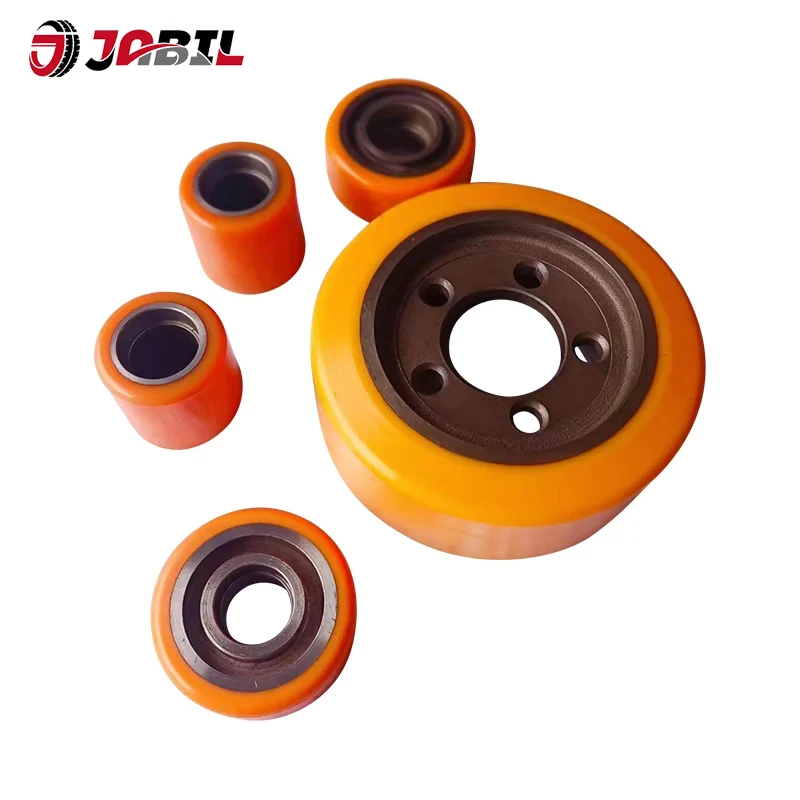
Polyurethane Solid Tires are designed for industrial environments where durability, stability, low maintenance, and reliable load support are essential. Unlike pneumatic tires, they do not depend on air pressure, eliminating common problems such as punctures, leakage, and frequent inflation. Their high wear resistance, strong tear resistance, and stable performance make them suitable for forklifts, material-handling equipment, warehouse vehicles, airport equipment, and other low-speed industrial applications. For buyers looking for customized solutions, JABIL Rubber Co., Ltd. provides professional industrial tire manufacturing and OEM customization, including customized dimensions, compounds, tread designs, and specialized vessel-type customization to meet different equipment and operating requirements.
What Makes Polyurethane Solid Tires Different?
The key difference lies in their material structure. Polyurethane combines high mechanical strength with elasticity, allowing the tire to withstand repeated loading and friction while maintaining dimensional stability. Compared with conventional pneumatic tires, the solid construction eliminates the risk of sudden deflation. Compared with ordinary solid rubber tires, polyurethane can provide excellent abrasion resistance, low rolling resistance, and good floor protection in suitable operating environments.
For warehouses, factories, logistics centers, and other facilities where vehicles operate continuously, these characteristics can contribute to fewer tire-related interruptions and more predictable operating costs.
Key Performance Characteristics
| Feature | Polyurethane Solid Tires | Pneumatic Tires |
|---|---|---|
| Puncture Resistance | Excellent | Vulnerable to punctures |
| Inflation Requirement | None | Regular maintenance required |
| Wear Resistance | High | Depends strongly on pressure and compound |
| Floor Protection | Excellent for suitable indoor surfaces | Varies by tread and compound |
| Maintenance | Low | Higher |
| Load Stability | Consistent | Affected by air pressure |
| Application | Warehouses, forklifts, industrial equipment | Road and mixed-terrain applications |
How Do Polyurethane Solid Tires Improve Industrial Operations?
The biggest benefit is operational reliability. Because there is no air chamber, operators do not need to worry about punctures caused by nails, metal fragments, glass, or other sharp debris. This makes Polyurethane Solid Tires particularly useful in warehouses and manufacturing facilities where unexpected tire failure can interrupt production or material handling.
Another important benefit is wear resistance. Polyurethane materials can provide strong resistance to abrasion and tearing, making them suitable for repetitive movement and high-frequency operations. JABIL's polyurethane products are designed for high-load, low-speed applications and are promoted for their impact resistance, shock absorption, and long service life.
Main Operational Effects
-
Reduced downtime: No inflation or puncture repairs are required.
-
Stable load support: Solid construction maintains consistent tire geometry.
-
Longer service life: High wear resistance helps reduce replacement frequency.
-
Lower maintenance requirements: Routine pressure checks are eliminated.
-
Cleaner operation: Suitable non-marking polyurethane options can help protect finished floors.
-
Improved efficiency: Low rolling resistance can be beneficial for electric industrial vehicles.
Why Is Customization Important for Polyurethane Solid Tires?
Not every industrial vehicle has the same wheel dimensions, load requirements, working speed, or operating environment. Using a standard tire when the application requires a specialized configuration can result in poor handling, excessive wear, or reduced service life.
This is why customization is an important part of professional tire manufacturing. JABIL Rubber Co., Ltd. provides industrial solid tires in a broad range of specifications and supports OEM requirements, including customized sizes, compounds, and branding. Its product range covers forklift solid tires, press-on tires, polyurethane wheels, aerial-lift tires, and other industrial applications.
Vessel-Type Customization for Specialized Applications
A notable advantage is JABIL's ability to support vessel-type customization. For specialized equipment, transportation platforms, marine-related handling equipment, or applications with unique structural requirements, customers may need a tire configuration that differs from conventional cylindrical or standard industrial designs.
With vessel-type customization, the tire structure, dimensions, tread configuration, material formulation, and other specifications can be adjusted according to the customer's equipment and application requirements. This provides greater flexibility for buyers who cannot find a suitable standard product.
For OEM buyers and equipment manufacturers, this customization capability can help create a more integrated wheel-and-equipment solution rather than forcing the equipment design to adapt to an unsuitable standard tire.
Where Are Polyurethane Solid Tires Commonly Used?
Polyurethane Solid Tires are especially valuable in controlled industrial environments where smooth surfaces, high operating frequency, and reliable material handling are priorities.
Typical applications include:
-
Forklifts and electric forklifts – Reliable for repetitive warehouse transportation and material handling.
-
Warehouse equipment – Suitable for pallet trucks, stackers, and other indoor handling equipment.
-
Manufacturing facilities – Useful where tires repeatedly carry loads across concrete or finished floors.
-
Airport and logistics equipment – Solid construction reduces the risk of tire-related interruptions.
-
Industrial carts and transport equipment – Suitable for low-speed movement and frequent loading cycles.
-
Customized equipment – Specialized sizes and configurations can be developed according to application requirements.
JABIL currently supplies industrial solid tire solutions to buyers in more than 50 countries and offers a wide range of sizes and industrial tire categories.
What Should Buyers Consider Before Ordering?
Choosing the right polyurethane tire requires more than simply checking the outside diameter. Buyers should evaluate the complete operating environment and equipment requirements.
Important factors include:
-
Equipment type and model
-
Tire dimensions and rim specifications
-
Maximum load
-
Drive, steering, or load position
-
Operating speed
-
Floor or road conditions
-
Working temperature
-
Daily operating hours
-
Required tread pattern
-
Hardness and compound requirements
-
Quantity and destination market
For customized projects, providing these details allows the manufacturer to recommend a more appropriate configuration. JABIL also requests information such as equipment model, existing tire size, rim dimensions, operating surface, duty cycle, quantity, and destination when evaluating tire requirements.
How Does JABIL Support Industrial Tire Buyers?
JABIL Rubber Co., Ltd. combines industrial tire manufacturing experience with OEM-oriented customization. Its product portfolio covers solid tires, press-on tires, polyurethane wheels, scissor and boom lift tires, OTR/engineering solid tires, and related accessories. The company also maintains a wide range of standard and non-standard sizes for different industrial applications.
For distributors, equipment manufacturers, fleet operators, and industrial buyers, this means they can source both standard Polyurethane Solid Tires and application-specific solutions from one manufacturer. Custom compounds, dimensions, tread patterns, branding, and vessel-type customization can provide additional flexibility for specialized projects.
Conclusion
Polyurethane Solid Tires provide a practical solution for industrial applications where puncture resistance, wear performance, stable load support, and low maintenance are important. Their airless structure helps reduce tire-related downtime, while polyurethane's mechanical properties make them suitable for demanding indoor and low-speed industrial environments.
For buyers with specialized equipment requirements, customization can be just as important as material performance. With OEM capabilities, extensive industrial tire experience, and support for vessel-type customization, JABIL Rubber Co., Ltd. can develop Polyurethane Solid Tires around specific equipment and application needs.
If you are looking for durable polyurethane tires, customized industrial tire solutions, or vessel-type designs for a specialized project, contact us today to discuss your equipment specifications, application requirements, and OEM customization needs.