

Why Does Your Toyota Make a Noise When Going Over Bumps and How Are Bushings Involved
2026-03-03
If your Toyota has started clunking or rattling every time you navigate a speed bump or a pothole, the culprit is often a small but critical component in your suspension. At CHEJU, we specialize in high-performance chassis parts, and we understand that diagnosing this noise starts with understanding the Toyota Stabilizer Bushing. These rubber components are the silent guardians of your ride comfort, and when they fail, your vehicle lets you know.
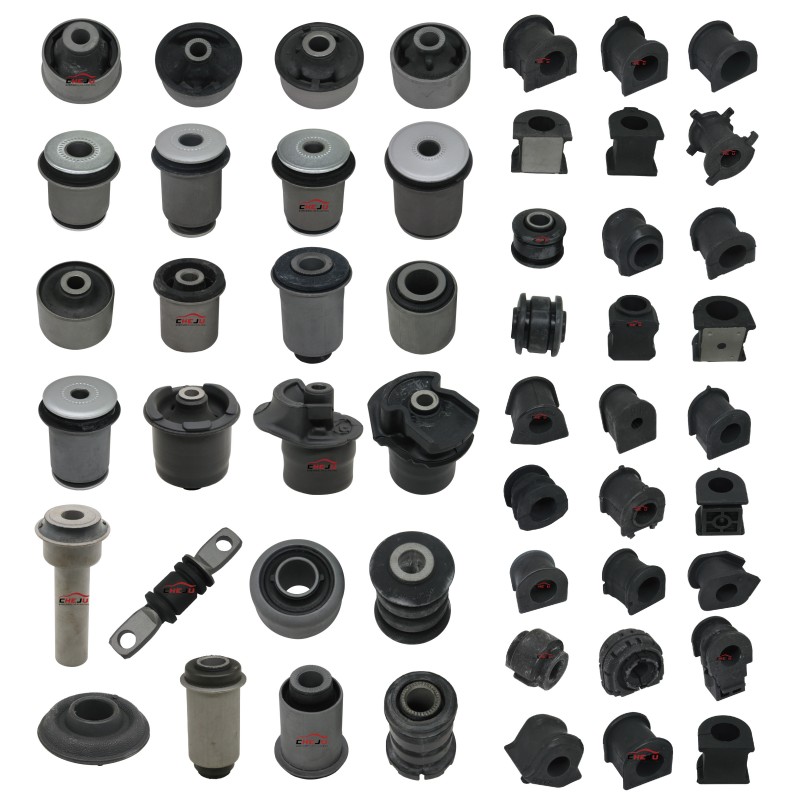
The Role of the Stabilizer Bushing
The stabilizer bar (also known as the sway bar) connects your left and right wheels to reduce body roll during turns. The Toyota Stabilizer Bushing acts as a cushion between this metal bar and the vehicle's frame. When these bushings wear out, the metal makes direct contact with metal, creating that unmistakable bump noise.
Common Symptoms of Worn Bushings
To help you diagnose the issue, here is a quick checklist of symptoms associated with failing suspension bushings:
-
Clunking Noise: A heavy thud sound when driving over uneven surfaces.
-
Squeaking: Dry or brittle rubber causing friction noises.
-
Poor Handling: Excessive body sway when cornering.
-
Vibration: You may feel vibrations through the steering wheel at low speeds.
Material Comparison: Rubber vs. Polyurethane
When replacing your Toyota Stabilizer Bushing, you generally have two material choices. The table below highlights the differences to help you decide which fits your driving style.
| Feature | Standard Rubber Bushings | CHEJU Polyurethane Bushings |
|---|---|---|
| Durability | Prone to cracking and wear | High resistance to wear |
| Noise Reduction | Excellent (absorbs vibrations) | Moderate (firmer ride) |
| Handling Response | Comfortable but vague | Precise and direct |
| Lifespan | 30,000 - 50,000 miles | 80,000+ miles |
Upgrading to a CHEJU polyurethane Toyota Stabilizer Bushing can eliminate the repetitive replacement cycle caused by factory rubber parts.
Toyota Stabilizer Bushing FAQ
To further clarify the importance of this component, here are the most common questions regarding suspension maintenance.
Q: Can I drive my Toyota with a broken stabilizer bushing?
A: While you can technically drive the vehicle, it is not recommended. A failed Toyota Stabilizer Bushing allows the stabilizer bar to shift excessively. This not only causes the annoying noise you hear over bumps but also compromises your vehicle's stability during emergency maneuvers. It puts extra stress on the end links and can lead to a failed safety inspection.
Q: How much does it cost to replace a Toyota Stabilizer Bushing?
A: The cost varies depending on the Toyota model and whether you choose Original Equipment Manufacturer (OEM) rubber or aftermarket performance parts. The parts themselves are inexpensive, usually ranging from $20 to $60 for a set. However, labor costs can be higher if the bushings are difficult to access. Replacing them with a high-quality CHEJU kit often provides a better long-term value due to increased durability.
Q: Is it difficult to replace the stabilizer bushings myself?
A: For a DIY enthusiast, replacing a Toyota Stabilizer Bushing is generally a moderate-level task. It usually involves jacking up the vehicle safely, removing the metal retaining bracket that holds the bushing, and swapping out the old rubber for the new one. However, rusted bolts can be a challenge. If you are not comfortable working with suspension components that are under tension, it is always safest to consult a professional mechanic.
Ensure Your Ride is Smooth with CHEJU
Ignoring that clunking noise doesn't just ruin your driving experience; it leads to accelerated wear on other suspension components. Whether you are looking for a direct replacement or a performance upgrade, choosing the right Toyota Stabilizer Bushing is essential for safety and comfort.
Contact us today at CHEJU to find the perfect suspension solution for your Toyota. Our team is ready to help you get rid of that noise for good.